Hope Returns: Field Notes from post-Orbán Budapest, July 2026
Izabel Galliera
I have been in Budapest since June 20, 2026. Only three months after the historic Hungarian election on April 12 that ended Viktor Orbán’s 16-year regime, this is a timely moment to be in the city. Over the last decade and a half, I have come to Budapest almost every summer to research contemporary socially engaged art, art and activism. This time, however, the city feels different. There is a palpable joy on people’s faces and a sense of hope and relief in their voices. Several people have told me that they once again feel proud to be Hungarian—to return home from vacation and to wake up in the morning. One friend recently said to me, “I just cannot believe this is happening. I never thought I would see this change in my lifetime.” Another said, “I feel I can breathe again,” while another artist/activist friend admitted, “I feel tired and simply relieved.”
A widely circulated video of Kossuth Square on May 9, 2026, captures the euphoric public celebration surrounding the inauguration of Hungary’s new prime minister, Peter Magyar, and his governing Tisza Party, marking the end of Orbán-era. A vast and joyous crowd moves slowly carrying Hungarian and European Union flags, while several people appear almost to float on water as they leap across the reflective pool to get closer to the Parliament building. In a recent conversation with Hungarian art historian Edit Andras who was at the celebration, she described the moment as full of “euphoria, and hope; as if one was resurfacing from a dark abyss and is now able to breathe and see again.”[1]
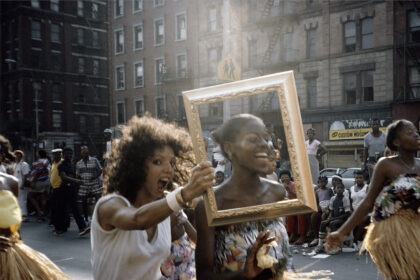
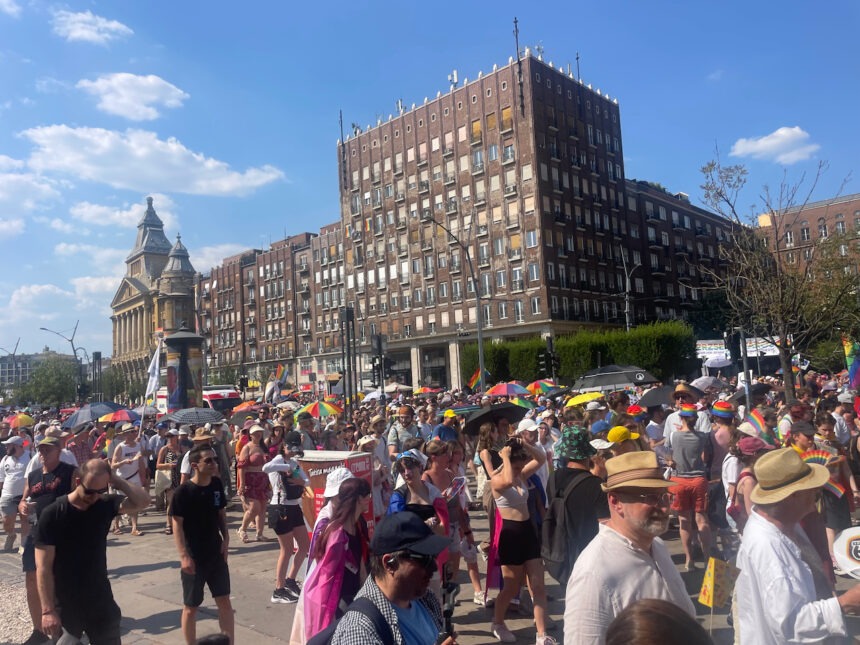
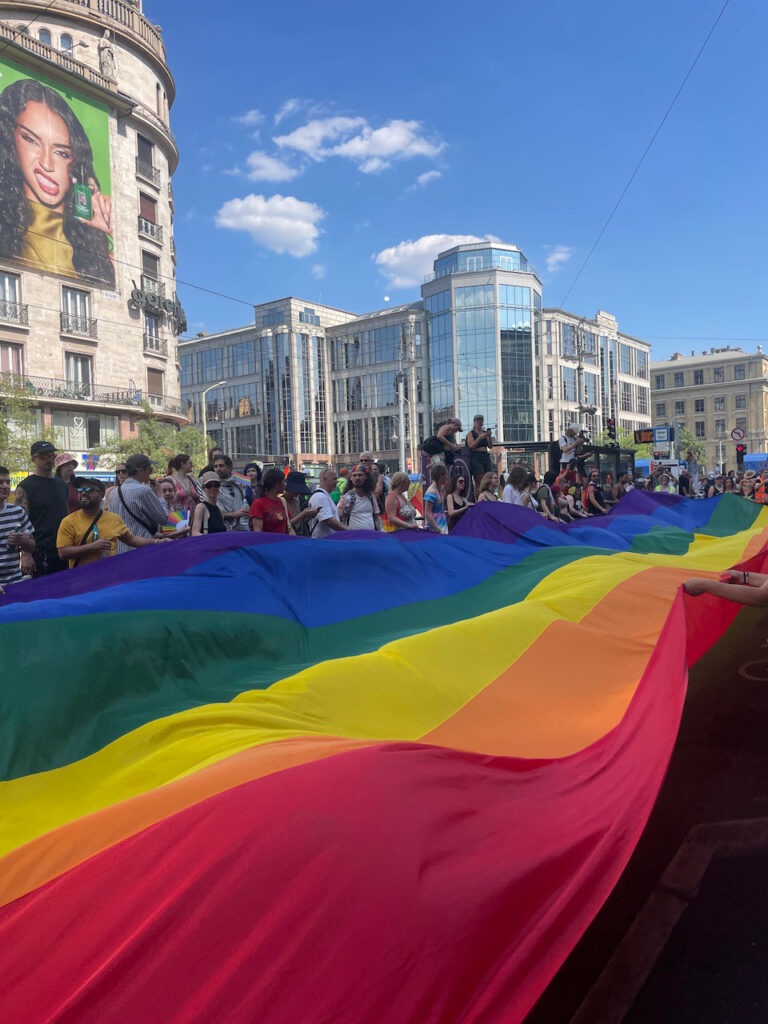
Constructed during Orbán’s 2012–2014 redesign of Kossuth Square’s sculptural program, the reflective pool was strategically placed to create a visual axis leading to the Parliament building. It also commemorates the site where peaceful demonstrators were fired upon on October 25, 1956, in what became known as the “Bloody Thursday Massacre” during the Hungarian Revolution against Soviet rule. Equally significant on this inauguration day is the performance of the patriotic song Magyarország (“Hungary”) by the Roma singer Oláh Ibolya. The choice is deeply symbolic. Under former Prime Minister Viktor Orbán’s administration, Roma communities were systematically marginalized, subjected to institutional discrimination and racism, and often treated as second-class citizens. Her performance represented not only a patriotic celebration but also a powerful and hopeful gesture of inclusion in a newly imagined national community. I experienced firsthand the collective energy and joy of the 2026 Budapest Pride parade on June 27.
On Tuesday, July 7, I went to dinner at the home of close friends—a contemporary art curator and an artist—whom I visit each time I come to Budapest. Shortly after I arrived, Sándor excitedly took out his phone and showed me a photograph of a black television screen displaying the following message in Hungarian (translated below):
Public media cannot lie. We apologize because we did this for so many years! Public media is now transforming to be independent and credible in the future. The news service is temporarily suspended. Stay with us! (Translated by the author from Hungarian).
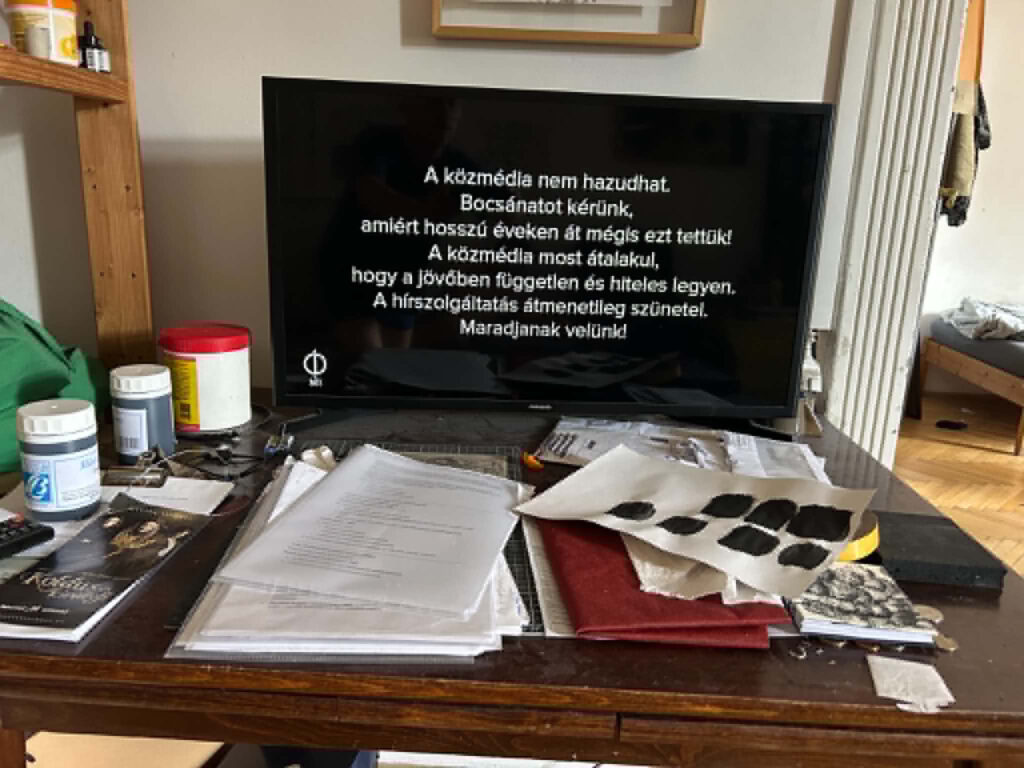
The news channel M1, part of the Hungarian public broadcaster (MTVA), interrupted its regular programming to display this message. The pronoun “we” in the statement is deliberately ambiguous. As friends and I discussed over dinner a few days later, it can be interpreted in at least two ways. On the one hand, it suggests that the former administration is voluntarily acknowledging defeat and offering an apology to the Hungarian people. On the other hand, if understood as the voice of Fidesz—now an opposition party seeking to regroup and return to power[2]––the apology can be read as one made under political obligation following the change in government. Regardless of its ambiguity, it was a rather emotional moment for many.
The following day, I learned that at exactly 19:56, the news channel resumed broadcasting with a continuous screening of classic Hungarian films, beginning with Bacsó Péter’s A tanú (The Witness). As one friend pointed out, the time, 19:56, carries profound symbolic significance for Hungarians, as it references the 1956 Hungarian Revolution, the ultimately unsuccessful uprising against Soviet rule. The restructuring of the public broadcaster forms part of a broader nationwide transformation initiated by Prime Minister Péter Magyar and the governing Tisza Party.
Under 16 years of rule by Viktor Orbán and his governing party FIDESZ (Hungarian Civic Alliance), a right-wing populist and national-conservative political party, Hungary has been dominated, as Hungarian artist and professor Szabolcs KissPál describes it, by a “semi-dictatorial conservative nationalism, neoliberal oligarchic authoritarianism and national capitalism” […] where “political propaganda merges with political marketing.”[3]
This translated into a centralizing, controlling and politicizing cultural environment, eliminating all opposition in the media, the academia and the courts, and limiting and constricting the operations of NGOs who receive funds from abroad. Because of such measures, the “Freedom in the World 2019” report by Freedom House, a human rights watchdog, based in Washington DC, has ranked Hungary as “partly free.” It was downgraded from “free,” the status it held after the collapse of the communist regime in 1989. Orban’s all-encompassing and constricting governance has become almost like a template for restructuring societies worldwide under the visions of far-right nationalism promulgated by leaders such as Donald Trump in the U.S., Vladimir Putin in Russia, Recep Tayyip Erdoğan in Turkey and Robert Fico in Slovakia. Curator Daniel Grúň in the roundtable discussion in this issue of FIELD describes the impact of these political measures on art and culture in Slovakia.
When I was invited by Rebecca Blocksome, the director of the Social Practice Minor Program at the Kansas City Art Institute (KCAI) to teach a three-week study-abroad art history course in Budapest for seven American studio art students, I decided to focus on art and advocacy during the Orbán era. It has been a unique teaching and experiential learning opportunity for students. Through daily site visits, students encountered in real life the ideas and issues they had read about in the assigned texts and engaged in conversations with both the authors of those texts and the practitioners whose work they examined. I wish I was a student taking this course.
During the first week, we focused on how Hungary’s socialist past has been remembered and represented at Memento Park where former socialist monuments were placed in quarantine, and at the House of Terror, where visitors are invited to learn through immersive and theater-like displays about the fascist and socialist past. Following visits to these sites, the Hungarian art historian Hedvig Turai lectured on the complexities of defining a national identity after 1989, the competing discourses of remembering and forgetting the socialist past, and the role of art in representing history at these two sites. For instance, Turai pointed out that Memento Park never fully resolves whether it is intended to function as a serious memorial or as a tourist attraction.
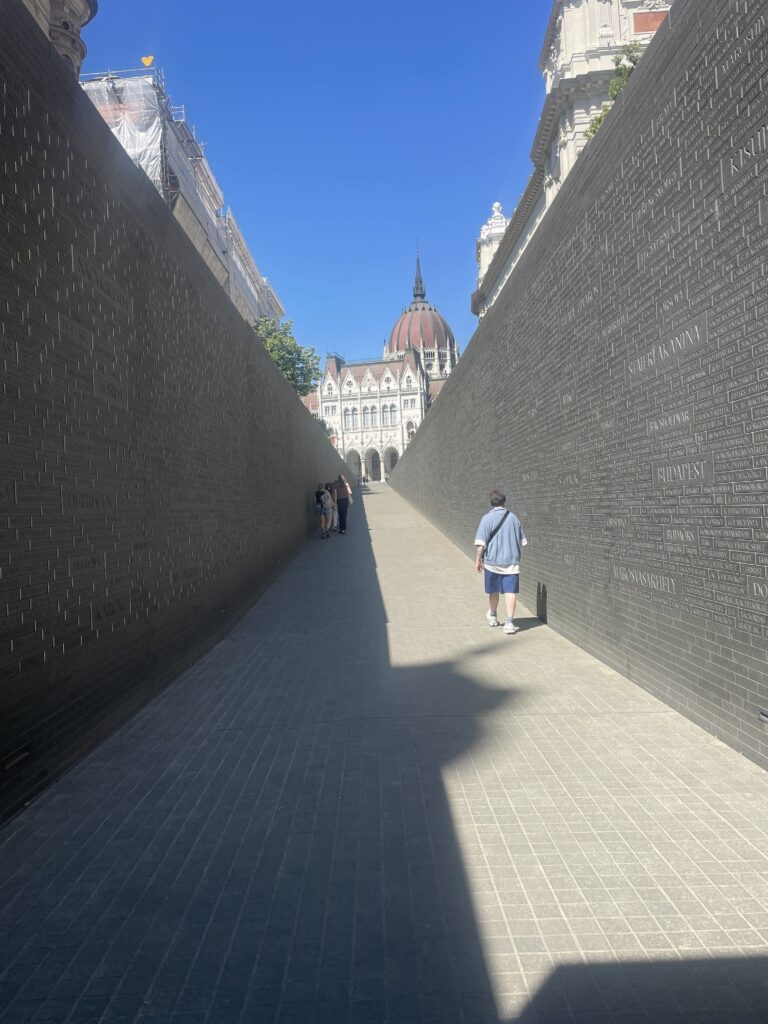
On another day, following an early morning visit to the sculptures of Kossuth Square and the Memorial of National Unity or Solidarity (2020), also unofficially known as the Trianon Memorial, students heard from Edit András, who discussed Orbán’s renationalization of public space between 2012 and 2014. András explained how the sculptural program in Kossuth Square constructs a continuous national narrative that links Orbán’s regime to the pre-Second World War period bypassing both the fascist and communist eras. She also pointed out how the Memorial of National Unity, through its nationalized geography, communicates Orbán’s vision of Greater Hungary—the nation as it existed before the 1920 Treaty of Trianon, under which Hungary lost 71% of its territory, an event widely regarded as a national trauma.
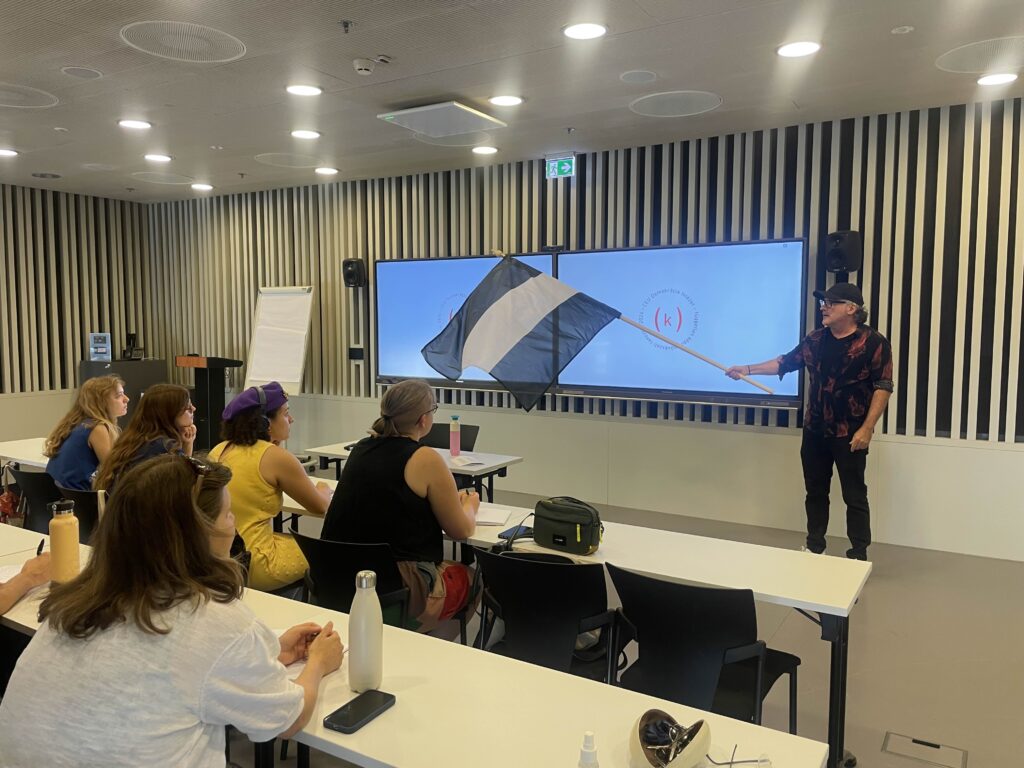
Pedagogical art and art activism formed the focus of the second week of the course. Small and independent pedagogical art initiatives, often taking the form of nomadic artist schools, became especially significant under Orbán’s systematic instrumentalization of education. For example, students heard from the Hungarian artist Attila Menesi, who presented two of his ongoing projects: The Independent Art Department (2013–) and Context Program (2024–), the latter developed in collaboration with the Democracy Institute at the Central European University. Working within the framework of critical pedagogy and interdisciplinary thinking, Menesi aims to cultivate broader access to contemporary art theory and practice. As illustrated in the accompanying photograph, he began his presentation to the students by waving a black-and-white flag as both an homage to a 1974 artistic action and as a symbolic gesture celebrating the restoration of Hungarian democracy following the end of Orbán’s government.
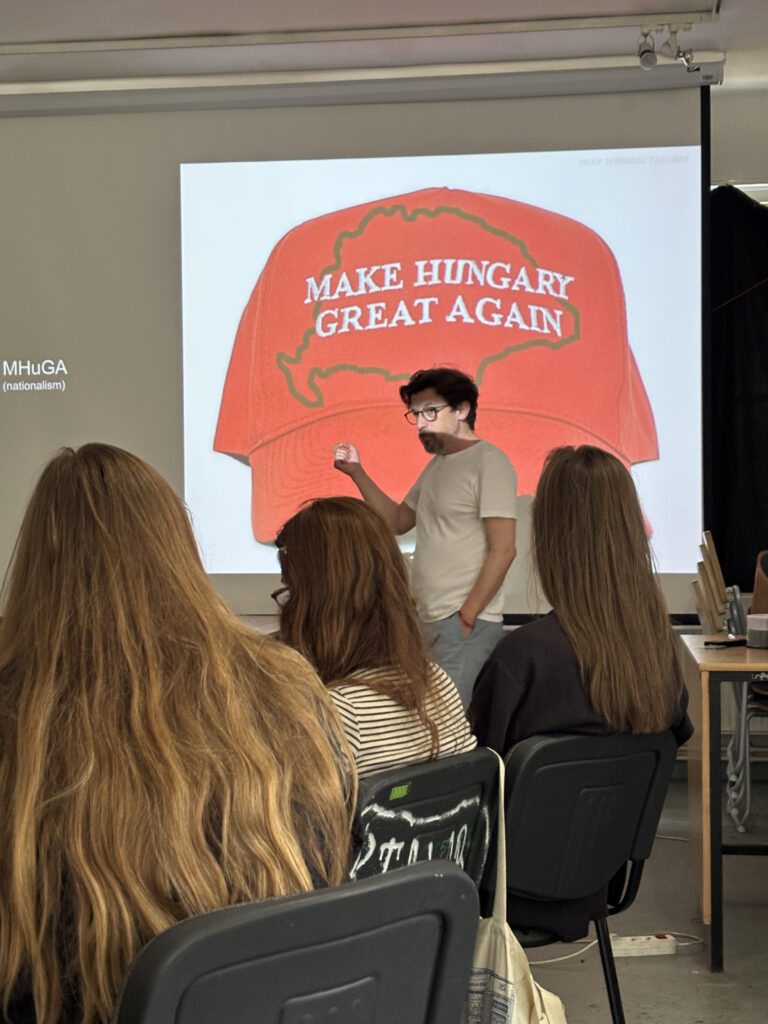
Artist and professor Szabolcs KissPál introduced students to the several art-activist projects undertaken between 2012 and 2015/16 as a member of Free Artists (Szabad Művészek). The group organized numerous direct-action protests against the Orbán-supported Hungarian Academy of Arts (Magyar Művészeti Akadémia, MMA). Despite its name, the MMA is not an educational institution but an association of more than 250 regular members that exercises considerable influence through voting rights and funding allocation on state-funded cultural juries and advisory boards. Orbán’s government also granted the MMA control over important cultural institutions, including the Kunsthalle (Műcsarnok), Budapest’s leading venue for contemporary art. KissPál expressed his long-held conviction that Orbán’s political, economic, and cultural strategies would become a model for other nationalist leaders. His concluding slides playfully linked three political slogans: Trump’s MAGA (Make America Great Again), Orbán’s MEGA (Make Europe Great Again), and MHuGA (Make Hungary Great Again), visually tracing and connecting a progression from American populism to European sovereigntism and Hungarian nationalism.
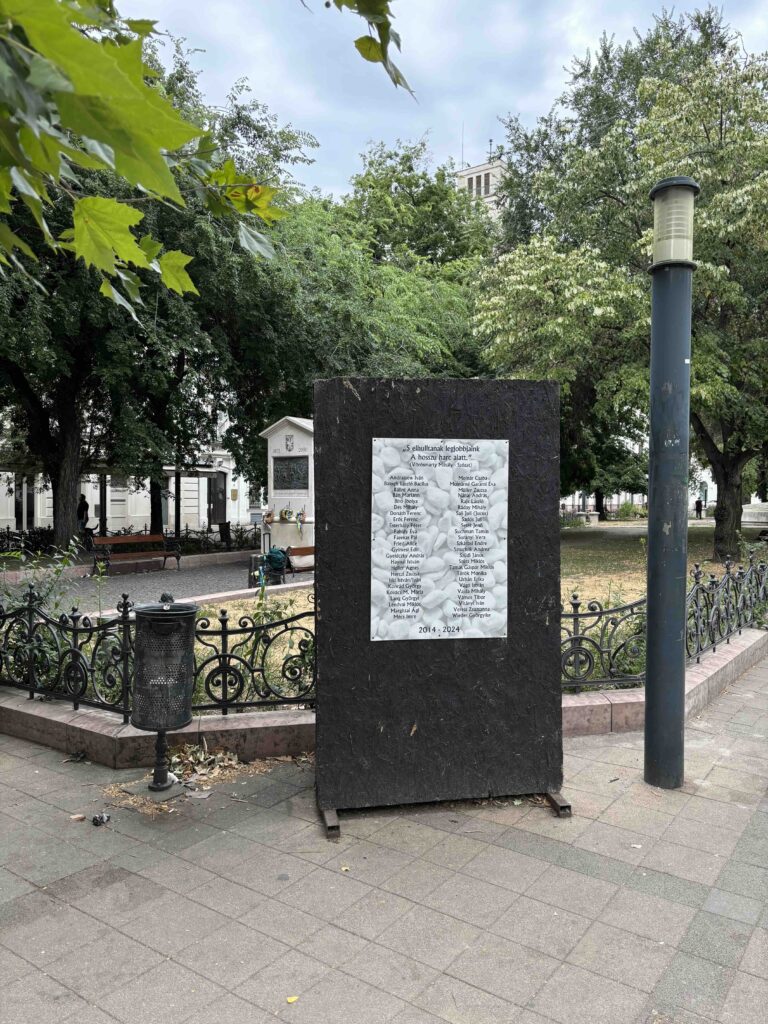
Eleven Emlékmű (Living Memorial) in Szabadság tér (Liberty Square) has been an ongoing community initiative since 2014, when it emerged as a collaboration among artists, art historians, activists, and community members in opposition to the construction of a government-funded monument that denies Hungary’s complicity in crimes committed during the Nazi occupation. The initiative began as a flash mob that invited participants to bring and place in the square objects of personal significance related to the Holocaust. Activist and community organizer Balázs Horváth, known as Byron, who was active during the initiative’s early years, spoke to the students about the discursive circles he helped organize and the behind-the-scenes logistics required to sustain on average three weekly public conversations with invited guests for more than a year. While sitting together in a discussion circle, the students and I looked toward a black wooden storage box positioned to one side of Liberty Square as Byron explained that he had placed it there in 2015 as an experiment to see whether it would be removed. When no officials took notice, the box remained and was subsequently used to store the tent equipment that was erected each day, even during the cold winter months, for the discussion circles. Although Byron has since stepped away from the contemporary art activist scene, he continues his advocacy work as a team leader at aHang (theVoice) – Hungary’s largest independent pro-democracy citizen action platform.
On another day, we met with the art historian, curator, and director Dóra Hegyi of tranzit.hu, an independent contemporary art organization fully funded by the Erste Foundation and part of a network of contemporary art centers across Central and Eastern Europe. Hegyi shared with the students the important and wide-ranging work the organization has undertaken in the field of contemporary art in Budapest over the past eighteen years. Its activities include organizing exhibitions and publishing books and catalogues, with a particular emphasis on Hungarian Neo-Avant-Garde artists of the 1960s and 1970s; offering workshops and the Catalyst Award; and establishing the Free School for Art Theory and Practice (2008–2018), which sought to connect Hungarian art professionals with international artists, curators, and scholars. Having occupied several locations throughout Budapest over its history, the organization’s most recent incarnation is Space of Opportunities, located in District VIII. Designed for both art and non-art audiences of almost all ages, the space serves as a gathering place for collective reflection, dialogue, and creativity. The KCAI students also participated in the four-day Urban Camp (July 7–10, 2026), a workshop-based program led by artists exploring a range of social and artistic themes that Space of Opportunities organizes each summer. Following our meeting with Hegyi, we visited ISBN Book+Gallery, the only bookstore in Budapest dedicated exclusively to contemporary art.
We met with Katalin Székely, a member of the curatorial team of OFF-Biennale Budapest, at the Blinken OSA Archivum, an “activist archive” that seeks to “publicly reflect on matters of societal interest, including revisionism, the falsification of history, human rights violations, social injustice, and the state of public collections.” After introducing the students to some of the archive’s holdings, Székely provided an overview of the successive editions of OFF-Biennale Budapest since its inaugural edition in 2015. Under Orbán’s government, the initiative has served as a vital lifeline for Hungary’s independent contemporary art scene. The “OFF” in its title refers to the organizers’ refusal to accept funding from the Fidesz government, relying instead on support from international foundations and partners. With each new edition, OFF-Biennale has reconceptualized and experimented with different curatorial models while continuing to “strengthen the local independent art scene, and initiate public discourse about urgent yet neglected social, political, and environmental issues.” The next edition is scheduled for May 2027. Students made connections between the OSA archive and Artpool Art Research Center, which we visited during the first week. Founded in 1979 by the artist György Galántai and the art historian Júlia Klaniczay, Artpool is one of the most important archives of avant-garde, conceptual, Fluxus, mail art, and experimental art in Central and Eastern Europe. It describes itself as an “active archive” because it not only preserves artistic practices but also produces new projects, exhibitions, collaborations, and networks that themselves become part of the archive.
We met with the art historian and critic József Mélyi in front of Műcsarnok (Kunsthalle Budapest). He shared invaluable insights into Budapest’s art museum landscape, tracing its transformation before and during the Orbán era. He highlighted some of the key institutional changes introduced under the Ministry of Human Resources (Emberi Erőforrások Minisztériuma, EMMI), which existed from 2012 to 2022. As one of the Fidesz government’s “super-ministries,” it consolidated several previously independent ministries and oversaw culture, public education, higher education, healthcare, social affairs, sports, churches, and cultural heritage.[4] Contemporary art institutions were profoundly affected by these changes. For example, Barnabás Bencsik’s contract was not renewed after his five-year term as director of the Ludwig Museum of Contemporary Art, despite successfully connecting the museum to the international and European contemporary art scene through an ambitious exhibition and public program. He was replaced by Júlia Fabényi, who, despite having considerably less experience in the field of contemporary art, had previously served as director of Műcsarnok between 1998 and 2002 during the first Orbán government. Mélyi also discussed Outer Space / Kívül Tágas, a project he co-organized with two of his students, Eszter Kozma and Márton Pacsika. Beginning in 2013, the project consisted of fifty contemporary protest art interventions and actions staged in front of Műcsarnok, taking place once a week. The interventions protested the Fidesz government’s transfer of the institution to the Hungarian Academy of Arts (MMA). Our conversation concluded with a question: Will Kunsthalle Budapest be returned to the contemporary art community, or will it remain under the control of the MMA? Mélyi remains hopeful.
Hungarian art historian and curator Katalin Timar at the Ludwig Museum of Contemporary Art offered us an insightful guided tour of the exhibition, Black Mirror, The Long Shadow of the Future: Selections from the Ludwig Museum Collection curated by Borbála Kálmán and József Készman. Timár’s guided tour concluded with a thoughtful question from one of the students, who asked what would happen now that Orbán was no longer in power. Would the senior leadership of the Ludwig Museum change? Would its current director, appointed by Orbán in 2013, be replaced? It is precisely these kinds of questions that currently preoccupy contemporary art practitioners in Budapest.
In the still joyous, celebratory, and hope-filled atmosphere of post-Orbán Hungary, many questions have emerged. Foremost among them is what the country’s cultural institutions and artistic infrastructure will look like in the years ahead. Who will lead these institutions? As I write this, art historians, artists, curators, and cultural workers are meeting in working groups, debating and reflecting on how best to facilitate the restructuring of the cultural field within Hungary’s newly restored democracy. Together, they are drafting proposals for officials in the newly elected government. Their discussions encompass topics such as art education and educational institutions, grant programs and competitions, and cultural funding. The Hungarian chapters of the International Association of Art Critics and the International Council of Museums are likewise forming working groups to address specific issues. The founders of the Living Memorial have also submitted a proposal to Budapest’s mayor calling for a public debate on the future of the Monument to the German Occupation in Liberty Square that was built under Orbán.
Hope for meaningful change has finally returned to Hungary!
Izabel Galliera is the Dorothy and Dale Thompson Missouri Endowed Associate Professor of Art History at the University of Missouri-Kansas City (UMKC), USA. She is the author of Socially Engaged Art After Socialism: Art and Civil Society in Central and Eastern Europe (2017 and 2022).
Notes
[1] Conversation with the author, July 6 2026.
[2] https://www.reuters.com/world/orban-re-elected-fidesz-party-leader-hungary-despite-election-loss-2026-06-13/
[3] Szabolcs KissPál, “Edupropaganda: Education in an Illiberal Democracy,” Pedagogical Art in Activist and Curatorial Practices, edited by Izabel Galliera and Noni Brynjolson, New York: Routledge, 2025).
[4] https://njt.jog.gov.hu/jogszabaly/2010-6-B0-2V?utm_source=chatgpt.com