Fugitive Infrastructures: Black Feminist Art Ecosystems and Community Cultural Centers as Counter-Universities
Tanisha M. Jackson, Ph.D.
Introduction
I first encountered a Black cultural center as a teenager, during a tour through The Ohio State University’s Upward Bound program. We were brought to the Frank W. Hale Jr. Black Cultural Center—a space whose name I did not yet fully understand but whose atmosphere I felt immediately. Something about it held me. Years later, as a college student, I returned not as a visitor but as a work-study student, spending four years inside that institution, learning its rhythms, its people, its purpose. I continued to return after that, conducting research alongside one of my mentors who directed the Center, assisting with curating art, contributing to a living cultural institution that had quietly become a home away from home. What I experienced in that space was not a museum in the conventional sense, and it was not a classroom in any sense I had been taught to recognize. It was, I would come to understand, a university—one built on entirely different terms. Fast forward to 2019: I became the Executive Director of the Community Folk Art Center at Syracuse University, and I found myself, again, inside one of these institutions—this time responsible for sustaining it. The theory I had been developing across years of scholarship suddenly had an address.
My appointment at Syracuse University weaves teaching, scholarship, and service into a single, rigorous practice—one that insists on their integration as both an intellectual commitment and a way of working in the world. The study of African Diaspora art and culture carries obligations that extend beyond the seminar room and the academic journal: obligations to the artists whose work we analyze, to the communities whose histories we excavate, and to the students whose intellectual and professional formation we shape. It is from within this integrated practice that the argument of this essay emerges.
This essay theorizes community-based Black arts institutions as sites of fugitive pedagogy and Black feminist ecosystem-building, drawing on a lineage of critical pedagogy and Black feminist thought to argue that these centers function as counter-universities. Building on Fred Moten’s understanding of fugitivity as refusal and insurgent sociality, bell hooks’s engaged pedagogy as mutual transformation, and my own framework of Black women’s art ecosystems, I argue that university-affiliated yet community-embedded Black cultural centers are spaces where aesthetic practice operates as political education under structural constraint.[1] The inquiry attends to exhibitions, artist residencies, youth arts training, and public humanities programming as modalities of liberationist pedagogy, while tracing how relational accountability, vulnerability, and care structure these programs.[2] It also foregrounds the paradox of institutional affiliation without proportionate redistribution of resources, highlighting precarity alongside governance rooted in refusal, relationality, and survival.[3] The synthesis positions Black cultural centers as aesthetic infrastructures of liberation that reframe arts education and social activism as inseparable from community well-being and political justice.[4]
Fugitivity and Counter-Institutional Pedagogy
Moten’s break with conventional sovereignty centers fugitivity—an ongoing practice of refusal and collective becoming that exceeds formal institutional capture.[5] His theorization in In the Break (2003) locates the Black radical tradition in aesthetic practice: in music, improvisation, and the refusal of a fixed subject position. Extended in The Undercommons (2013), fugitivity becomes institutional—it names the study that happens in the break rooms, the planning that happens beneath the administrative gaze, the care that refuses to be professionalized.[6] This scholarship illuminates how Black cultural centers incubate forms of collective life and knowledge production that resist containment within university or market logics. The essay extends Moten’s framework to interpret how programming and relational networks at community-centered art spaces enact fugitive sociality as pedagogy—teaching through practice that reimagines what counts as legitimate knowledge and who counts as a learner.[7]
Engaged Pedagogy as Relational Ethics
hooks’s engaged pedagogy asks educators to teach in a manner that respects and cares for the souls of students and foregrounds the holistic well-being of learners as central to the learning enterprise.[8] The approach requires mutual vulnerability, dialogue, care, and accountability within learning communities, extending beyond traditional classroom boundaries to transgress hegemonic norms. hooks opens Teaching to Transgress with a memory of the all-Black schools of her Kentucky childhood, where teachers understood that educating Black children was a political act, and contrasts this with desegregated institutions where Black life vanished from the curriculum. The lesson is structural: when institutions are built for a community rather than by or with it, the pedagogy shifts from liberation to management.[9] The present analysis aligns with this ethic, arguing that Black cultural centers cultivate spaces where care infrastructure—mentorship, intergenerational exchange, and counter-archival practices—constitutes essential educational design.[10]
Black Women’s Art Ecosystems and Care as Infrastructure
In Black Women’s Art Ecosystems: Sites of Wellness and Self-Care, I argue that the organizations built and sustained by Black women artists are not simply alternative venues for exhibition or education.[11] They are ecosystems—living, relational structures that embed care into their institutional design. Mentorship is not an add-on but a primary modality. Intergenerational exchange is not a program but a governing logic. Counter-archival practice—the deliberate collection, preservation, and activation of histories that dominant institutions have ignored—is not a special project but a constitutive function. Extending this framework to the case of the Community Folk Art Center, I demonstrate how care becomes infrastructure in institutional form.
The Fugitive Institution: CFAC in Structural Context
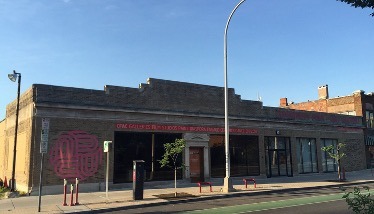
Founded in 1972, the Community Folk Art Center (CFAC) at Syracuse University has always occupied an ambivalent position: university-affiliated but community-rooted, institutionally housed but structurally under resourced, formally recognized but perpetually at risk of being absorbed, defunded, or redefined by forces beyond its originating community. This ambivalence is not incidental—it is constitutive of what Moten and Harney help us name as fugitive institutional life.
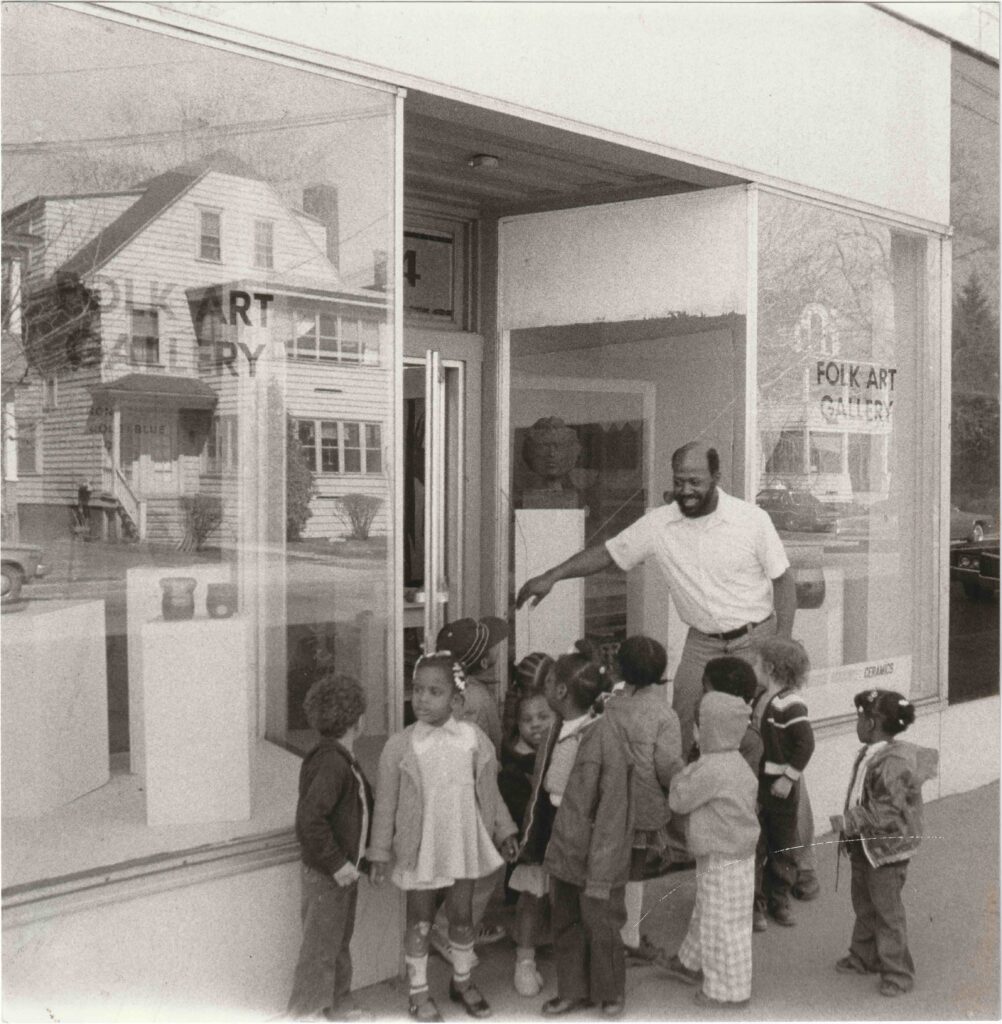
This is what Moten and Harney mean by fugitive planning: the practice of using institutional resources for purposes the institution did not intend and cannot fully see.[12] CFAC is formally affiliated with the university, yet the kind of knowledge it produces does not map neatly onto the institutional categories through which research is typically recognized and resourced
I want to be careful not to romanticize precarity. The labor of holding this institution in position—using the university without being used by it, accepting resources without ceding governance, building community trust while maintaining institutional credibility—is unceasing and largely unacknowledged. It is care labor in the most expansive sense: the tending of relationships, of vision, of the fragile structures that allow a community institution to persist. The governance structures that encode relational accountability—trust-building, mutual aid, transparent decision-making, and resource-sharing—constitute a form of organizational insurgency against extractive or hierarchical practice.[13] Yet this insurgency is also survival, and the literature urges attention to the structural and financial limits that can undercut even the most care-centered institutional designs.[14]
Exhibitions as Counter-Archives and Pedagogy
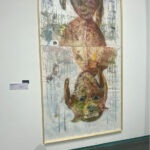
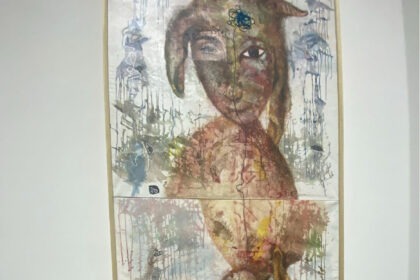
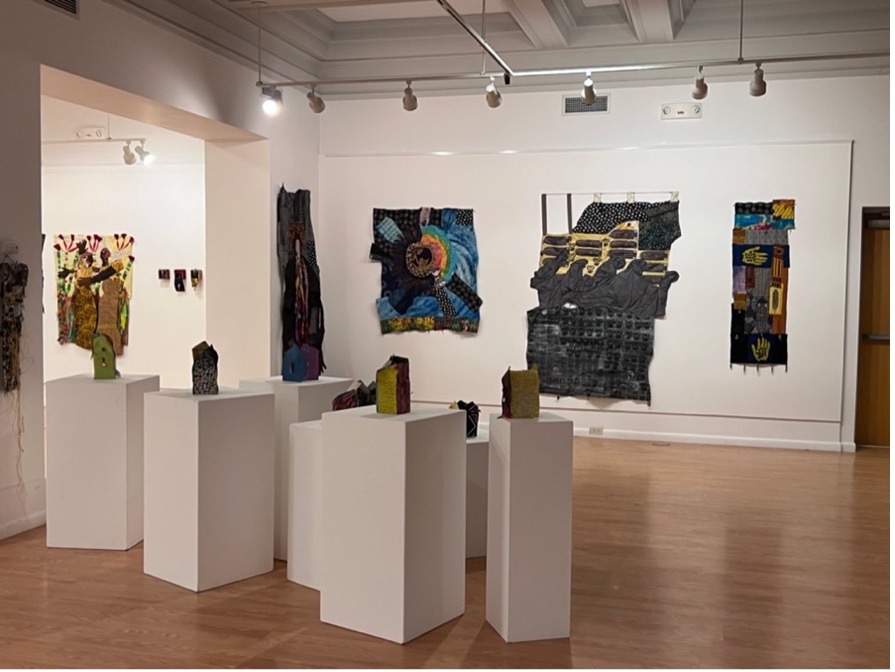
The exhibitions mounted at CFAC are among its most theoretically dense pedagogical sites. Unlike university art museums, which organize exhibitions around art-historical periodization, market significance, or donor interest, CFAC’s curatorial practice begins with community. Curatorial choices foreground relational storytelling, community memory, and the politicization of aesthetic form. By presenting works that address racial justice, gendered labor, and community healing, exhibitions enact a pedagogy that travels beyond formal coursework, inviting audiences to engage with critical questions about power, representation, and solidarity.[15] This is a curatorial politics. When CFAC mounts an exhibition of work by Black artists who live and work in Syracuse—artists who may not have gallery representation, who may not have MFA degrees, who may not have been reviewed in the trade press—it is making an argument about what counts as art, who counts as an artist, and whose aesthetic labor deserves institutional recognition. This argument is pedagogical: it teaches audiences, including scholars and students who visit the Center, that the category of art is a political construction whose boundaries can be redrawn.[16]
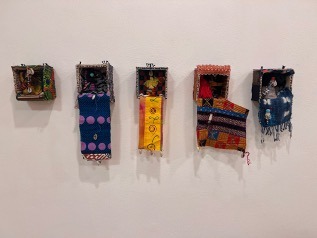
CFAC’s exhibitions also function as counter-archival acts—reframing histories and present realities through Black feminist lenses, while the residencies they anchor foster intergenerational and cross-disciplinary collaboration that expands what counts as scholarly output and pedagogy. CFAC maintains collections of photographs, ephemera, and documentation related to Black artistic and cultural life in Central New York—materials that would not exist in Syracuse University’s main library or in any major cultural repository. The labor of maintaining this archive is largely invisible, performed by staff and community members who understand that they are preserving a record that would otherwise be lost. This is counter-archival practice in the fullest sense: not merely collecting what others have ignored, but doing so with a politics of accountability to the communities whose lives are represented.
Artist Residencies as Insurgent Pedagogy
Residencies at CFAC create embedded relationships between artists, community youth, and faculty affiliates, enabling praxis-based learning: students and artists co-create projects that address local needs while interrogating national debates on arts funding, accessibility, and cultural labor. This aligns with hooks’s insistence on relational accountability and mutual transformation within learning spaces.[17] The most recent milestone in this area is CFAC’s first-ever formal artist-in-residence program, launched with a National Endowment for the Arts grant—a program that reflects growing national recognition of CFAC’s institutional stature and my ongoing commitment to expanding the Center’s capacity to support local artists. Visiting artists are not parachuted in as celebrity instructors. They are embedded in the community, asked to respond to its histories and conditions, expected to contribute to an ongoing conversation rather than deliver a finished product. The relational structure of the residency is itself pedagogical, modeling for students what genuine creative collaboration across difference can look like.[18]
My own scholarly practice is integrated into this model. As the founder and producer of Black Arts Speak—a curated short-film documentary series developed through CFAC in collaboration with Black Cub Productions—I have created a platform that amplifies the voices of African Diaspora artists including Lavett Ballard, London Ladd, Shanequa Gay, and Amber Robles Gordon. These films function simultaneously as creative works, pedagogical tools, and contributions to digital humanities and archival practice. In my courses, students engage with artists discussing their creative processes and community ties—materials that open discussions no textbook could replicate. The residency and the documentary series together constitute a model of artist-centered scholarship that refuses the separation between creative practice and knowledge production.[19]
Youth Arts Training and the Creative Arts Academy
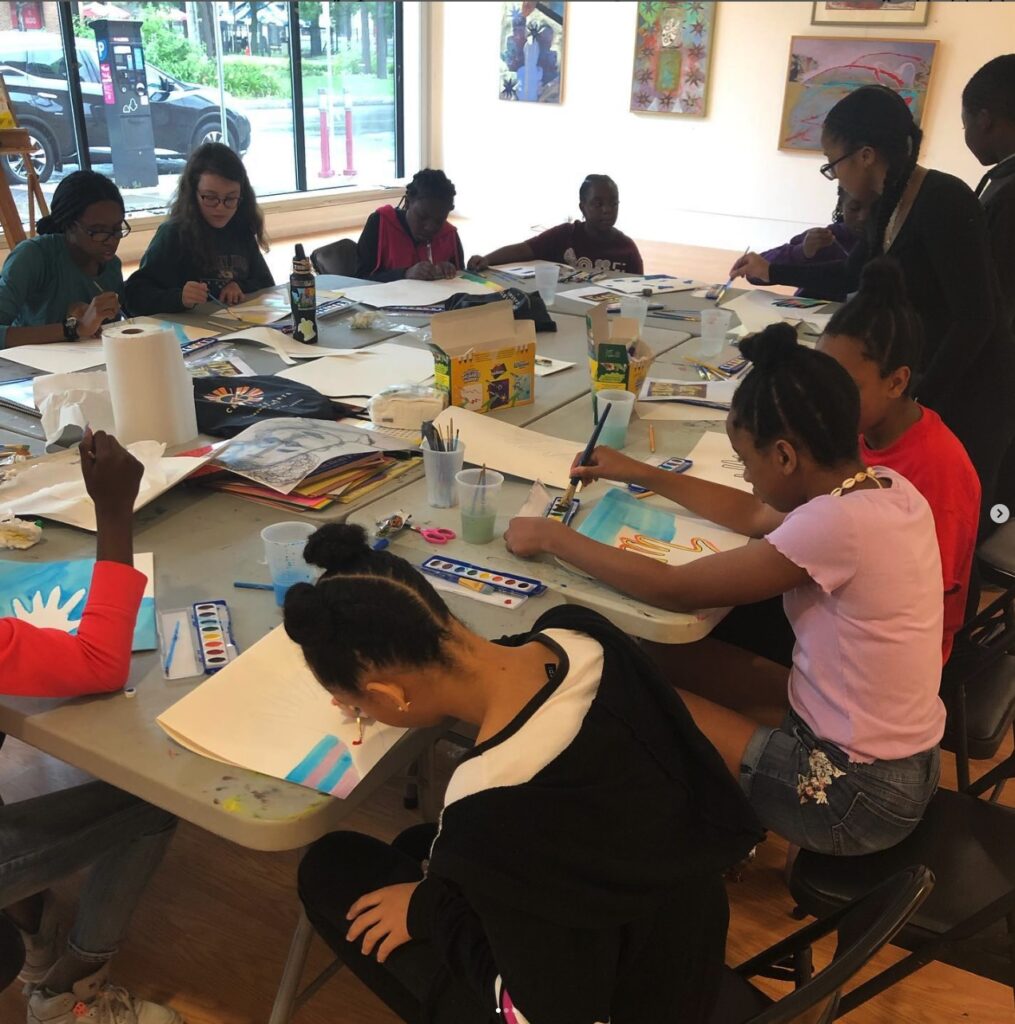
Perhaps the most sustained and structurally significant of CFAC’s pedagogical modalities is its programming for youth. The Creative Arts Academy (CAA) is CFAC’s signature youth development program—a structured, year-round curriculum of arts education, mentorship, and cultural formation that serves children and teenagers from surrounding Syracuse neighborhoods who are not, and may never be, enrolled at Syracuse University. The CAA does not operate on the assumption that art is a vehicle for individual uplift or college access—the twin logics of arts education under neoliberalism. It operates on the assumption that aesthetic practice is a mode of knowing, and that this knowing belongs, first, to the communities who have generated it.
Young people in the CAA work with professional artists, with elders, and with each other across age and experience. They are not students being trained toward a credential. They are makers, inheritors, and generators of culture. This is hooks’s engaged pedagogy realized in intergenerational form: a practice in which vulnerability and risk are shared, in which the studio and gallery are organized around mutual accountability rather than hierarchical transmission.[20] Moten’s concept of fugitivity illuminates the CAA’s deeper function: youth participants are cultivating forms of collectivity that resist the logics of individual achievement and market value, practicing instead what Moten and Harney describe as communal labor in the service of collective becoming.[21]
The CAA is also the site of some of CFAC’s most innovative cross-institutional collaborations. The STEM for Dance: Girls Rise Up program—developed in partnership with La Casita Cultural Center and supported by a substantial amount of grant funding from the Central New York Community Foundation, Micron Technology and National Grid—established CFAC as a regional leader in interdisciplinary, arts-and-technology education for girls from underrepresented communities.[22] This initiative reflects the conviction I bring to all youth programming: that the arts and the sciences are not separate domains of knowledge but complementary modes of inquiry, and that young women from marginalized communities deserve access to both simultaneously.
CFAC has also maintained and deepened a 54-year partnership with the Syracuse Chapter of The Links, Incorporated through the annual Competitive Teen Art Show competition—one of the longest-standing community collaborations in the Center’s history. When the COVID-19 pandemic threatened to interrupt this tradition in 2020, I developed and launched an online competition format to ensure continuity, preserving an unbroken record of programming that reflects our sustained commitment to youth arts engagement in the Central New York region.[23] These are not peripheral programming decisions; they are expressions of the institutional commitment to treating youth cultural formation as essential infrastructure, not optional enrichment.
Community-based mentoring through partnerships with the Office of Community Engagement, SU Summer Internship programs, and Say Yes Syracuse has created experiential learning and mentorship pathways for more than twenty Syracuse youth. This reflects a core conviction I carry from my scholarship and my practice alike: that the obligation to cultivate the next generation of scholars, artists, and cultural workers does not stop at the edge of campus. Youth arts training, in this sense, is not supplementary to the counter-university. It is its most direct expression—the site where the next generation learns that their cultural inheritance is theirs to interpret, extend, and transform.
Public Humanities Programming as Democratic Pedagogy
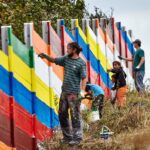
Public-facing programming at CFAC—talks, workshops, collaborative archives, and large-scale community events—transforms the Center into a community lab where knowledge production is collaborative, reflexive, and accountable to local communities. This practice resonates with engaged pedagogy’s emphasis on dialogue, shared authority, and learning that transcends disciplinary boundaries.[24] CFAC’s public programming is organized not around the occasions that structure academic public events—the book launch, the research presentation—but around questions the community is already asking: about gentrification and displacement, about the histories of Black neighborhoods in Syracuse, about the relation between art and survival.
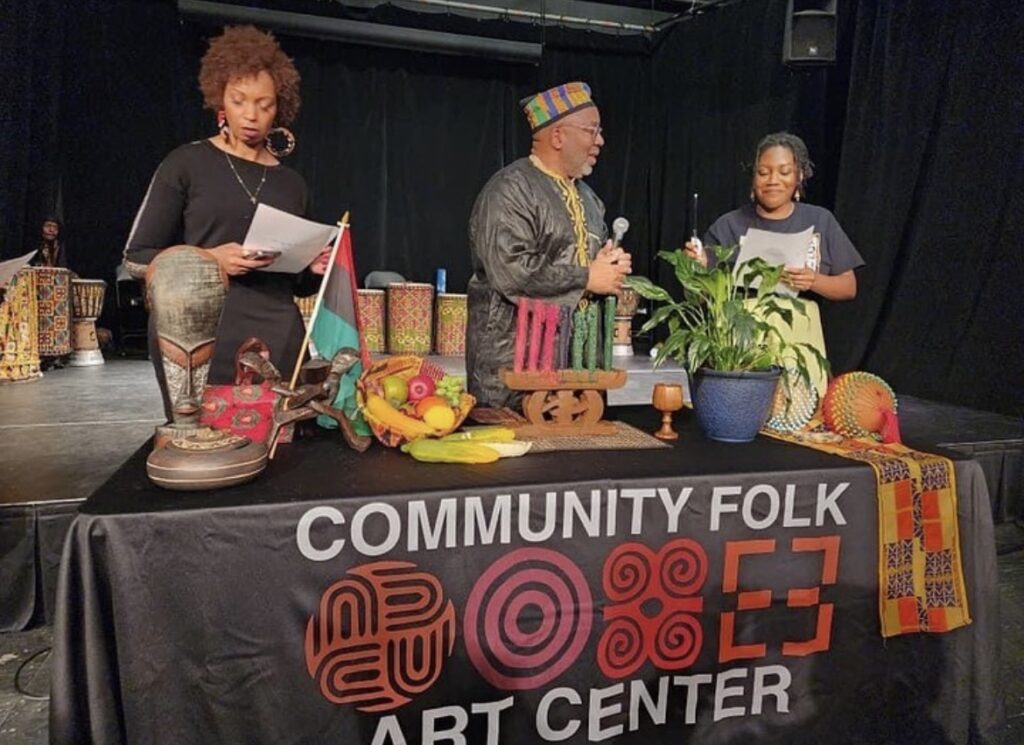
The scale and reach of this programming is significant. The CFAC 50th Anniversary Celebration, which was organized in 2022, brought Ailey II to the Landmark Theatre before an audience of more than 1,500 people—including 450 students bused in from the Syracuse City School District—and earned official proclamations from New York State Senator Rachel May and Syracuse Mayor Ben Walsh.[25] The annual pre-Kwanzaa celebration draws close to 200 participants from both the local Syracuse community and the Syracuse University campus. The annual Maternal Black Health Summit, hosted in collaboration with Upstate Medical University, brings together healthcare providers, community advocates, and artists to address Black maternal health disparities through a culturally grounded lens—a partnership that exemplifies the kind of boundary-crossing, community-responsive work I believe cultural institutions are uniquely positioned to do.
These events are pedagogical in the broadest sense. They teach—about history, about cultural production, about the relation between wellness and aesthetics—through gathering, through embodied participation, through the experience of collective cultural life. Scholars participate in these events, but not as the primary audience or the authoritative voice. They are, in hooks’s sense, learning as much as they are teaching. This is the democratic aspiration of public humanities at its most realized: not the popularization of academic knowledge, but the creation of conditions in which multiple forms of knowing are in genuine conversation.
Care as Infrastructure
My framework of Black women’s art ecosystems argues that community-based arts organizations built and sustained by Black women are not simply alternative venues. They are ecosystems—living, relational structures where care is embedded in institutional design.[26] CFAC was founded by and has been sustained through the labor of Black women. This is not a biographical footnote; it is a theoretical claim about the relation between organizational form and organizational values.
Care is structural at CFAC—built into the rhythms of programming, the design of physical space, the protocols of relationship-building, and the commitments that shape what the Center refuses to do as much as what it chooses to do. The governance structures at CFAC encode relational accountability—trust-building, mutual aid, transparent decision-making, and resource-sharing—as a form of organizational insurgency against extractive or hierarchical practice.[27] This articulation of care as infrastructure is operationalized in governance, program evaluation, and day-to-day operations, thereby aligning with hooks’s vision of education as a practice of freedom rooted in care.
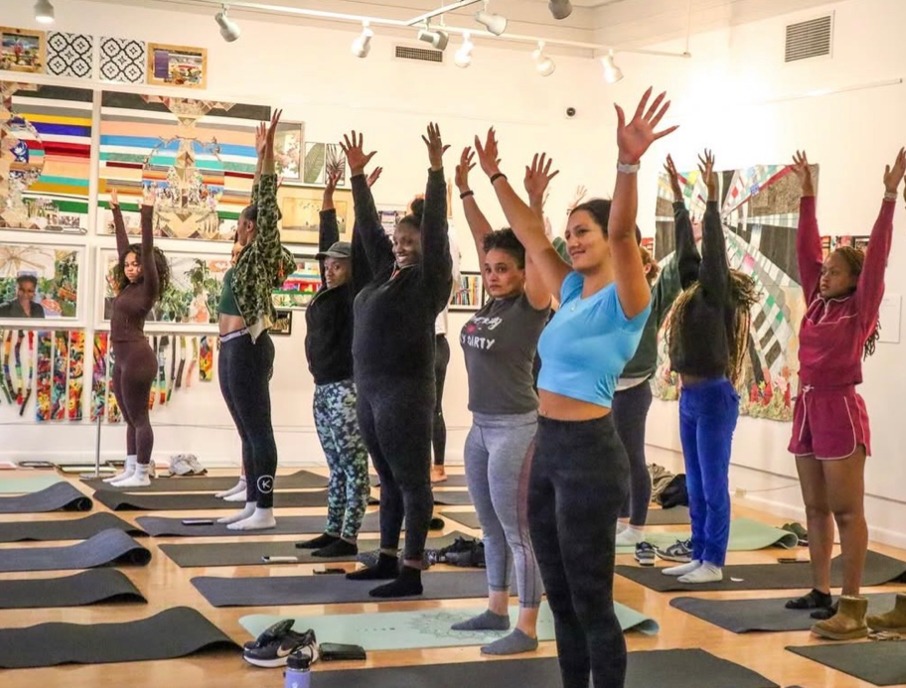
The mentoring dimensions of this care infrastructure are significant. I supervise five university employees at CFAC and, each academic year, oversee an average of twelve to sixteen undergraduate work-study students—one of the highest-volume mentoring responsibilities in my appointment and one of the most consequential. These students arrive with varying levels of familiarity with arts administration and cultural institutions. I work deliberately with all of them—particularly those majoring or minoring in African American Studies—to draw connections between CFAC’s institutional mission and the core commitments of the discipline: social responsibility, cultural stewardship, and community accountability. Many former work-study students have gone on to graduate study and careers in the arts and nonprofit sectors. CFAC has played a material role in their formation, and I take that seriously as both a mentoring and an institutional obligation.
This mentoring labor is inseparable from my scholarly practice. The book I have written on Black women’s art ecosystems emerged directly from the institutional environment I lead and the community relationships I have cultivated. The care I provide to students, to community partners, and to the artists who move through CFAC is not separate from my intellectual life—it is, itself, a form of scholarship. My medium is not only the text; it is also the institution, and the ongoing work of tending it.
The Counter-University: Synthesis
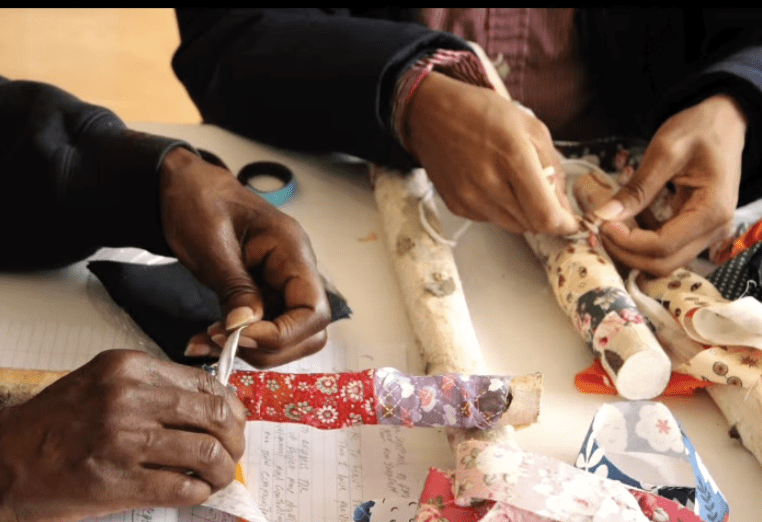
What emerges from this analysis is the concept I want to name explicitly: the counter-university. By this I do not mean an institution that opposes the university in a simple sense. I mean an institution that models a different relation to knowledge: one grounded in community accountability rather than credentialing, in collective practice rather than individual achievement, in the aesthetics of Black life rather than the abstracting logics of academic disciplines. The center acts as a counter-university by reconceptualizing pedagogy beyond credentialing, expanding who educates and who learns, and enlarging the sphere of what counts as legitimate knowledge.[28]
Moten’s fugitivity provides a lens to understand how these spaces cultivate collectives that persist beyond institutional capture, while hooks’s engaged pedagogy supplies a framework for relational care that structures all programming.[29] My art-ecosystem framework grounds this in Black feminist wellness practices, demonstrating care as critical infrastructure rather than optional support.[30] Together, these frameworks illuminate a mode of institutional life that is not merely supplementary to the university but corrective of it.
The counter-university operates through immersive, experiential modalities: exhibitions stage counter-archives; residencies cultivate community co-learning; youth programs through the Creative Arts Academy develop intergenerational mentorship networks; public humanities initiatives democratize access to knowledge. Across these modalities, the Center reframes arts education as a political project—one that fosters liberation, resilience, and mutual care in the face of systemic constraint. CFAC is visible to the university as a cultural amenity, a community engagement vehicle, a diversity resource. What the university cannot fully see is that CFAC is also a site of ongoing intellectual and political formation—that the young people who move through the Creative Arts Academy are being educated in the deepest sense, that the artists who exhibit and reside there are producing knowledge, that the community members who gather there are engaged in collective study. The counter-university thrives, in part, on this gap in comprehension. What is not fully seen cannot be fully captured.[31]
Institutional Affiliation versus Resource Redistribution
The literature recognizes a persistent tension: even as centers generate liberatory pedagogy, they face structural precarity and uneven redistribution of resources. This tension echoes Moten’s critique of structural systems that attempt to absorb and neutralize fugitive practices. Several sources emphasize that care-centered infrastructures must navigate political economy, funding structures, and governance hierarchies that may undercut emancipatory aims.[32] CFAC’s sustained operation under these conditions is a testament to the practical ingenuity of fugitive planning—but it is not a solution to structural injustice.
Translation Across Contexts
hooks’s engaged pedagogy is adaptable across disciplines and contexts; however, applying it in a university-community center setting may require careful negotiation of power dynamics, safety, and community consent, as discussed in debates about transgressive pedagogy and common-third approaches in social pedagogy.[33] The literature also urges attention to the limits and potential pitfalls of dialogic pedagogy when not accompanied by structural change.[34] Recognizing these tensions does not diminish the counter-university’s achievements—it clarifies what remains to be done.
Conclusion: Toward a Politics of Aesthetic Infrastructure
This essay reimagines Black cultural centers as fugitive infrastructures—sites where Black feminist art practice becomes political education and where care, mutuality, and resistance are not afterthoughts but constitutive features of institutional design. By synthesizing Moten’s fugitivity with hooks’s engaged pedagogy and my own framework of Black women’s art ecosystems, CFAC is theorized as a counter-university that fosters transformative learning, relational accountability, and community-led knowledge production. The paradox of precarious yet vital governance is acknowledged, and the analysis foregrounds liberationist pedagogy as inseparable from the aesthetics of Black cultural production.
Aesthetic infrastructure, in this sense, is not infrastructure for aesthetics. It is the organizing of relation, time, space, and resource around the proposition that making and experiencing art are not decorative additions to political life but its constitutive practice. Black feminist theorists from Audre Lorde to Angela Davis have made versions of this argument. What this essay adds is an institutional analysis: this proposition is not only articulated in texts but operationalized in organizations. CFAC is not simply influenced by Black feminist thought. Its organizational design is Black feminist thought in institutional form.
Standing at the intersection of these arguments—as a scholar of Black feminist art ecosystems and as the Executive Director of one—I am struck by how much theory and practice have to learn from each other. The formal concepts I bring from Moten, from hooks, from my own work, help me name what CFAC is doing. But what CFAC is doing also exceeds those concepts, points to dimensions of fugitive pedagogy that no single text has yet fully theorized. This essay is a beginning. The institution it describes has been at work for more than five decades. Both of us have more to learn. This framing invites further empirical work that traces how specific programming configurations—exhibitions, residencies, youth training through the Creative Arts Academy, and public humanities initiatives—instantiate fugitive pedagogy across diverse university-community contexts. The counter-university is not a utopian vision. It is an existing institution, quietly doing the work of liberation, in Syracuse and in Black communities across the country, waiting for the rest of the academy to catch up.
Dr. Tanisha M. Jackson is Assistant Professor of African American Studies and Executive Director of the Community Folk Art Center at Syracuse University. Her research examines Black art, Black Studies, and the intersections of art, identity, memory, and wellness, with particular emphasis on Black women artists. She is the author of Black Women’s Art Ecosystems: Sites of Wellness and Self-Care (University of Illinois Press, 2025), winner of the 2026 Anna Julia Cooper & C.L.R. James Award for Outstanding Scholarly Publication in Africana Studies. An internationally published scholar, Jackson advances equity, creative expression, and cultural preservation through research, exhibitions, and community-engaged arts programming.
Notes
- Fred Moten, In the Break: The Aesthetics of the Black Radical Tradition (Minneapolis: University of Minnesota Press, 2003); Fred Moten and Stefano Harney, The Undercommons: Fugitive Planning & Black Study (Wivenhoe: Minor Compositions, 2013). ↑
- bell hooks, Teaching to Transgress: Education as the Practice of Freedom (New York: Routledge, 1994). ↑
- Tanisha M. Jackson, Black Women’s Art Ecosystems: Sites of Wellness and Self-Care (Urbana: University of Illinois Press, 2025). ↑
- Cierra Kaler-Jones et al., “bell hooks’s Engaged Pedagogy as Relational Ethics in Liberatory Education,” Journal of Critical Education (2022); Jette Nielsen and Karin Tybjerg, “Care as Curatorial Infrastructure: Black Feminist Frameworks in Community Arts,” Museum & Society 22, no. 1 (2024); Courtney Haynes et al., “Intersectionality Pedagogy: Centering Black Women’s Knowledges, Voices, and Lives in Teaching and Learning,” Qualitative Inquiry 28, no. 8 (2024). ↑
- Jorge Sevilla, “Navigating the Paradox: Institutional Affiliation and Resource Inequity in Community-Based Arts Organizations,” Journal of Arts Management, Law, and Society 46, no. 3 (2016). ↑
- Moten and Harvey, The Undercommons, pp.50–51. ↑
- Moten, In the Break, 1–24 ↑
- hooks, Teaching to Transgress, pp.13–22. ↑
- Ibid., pp.2–3. ↑
- Ibid., pp.13–22. ↑
- Jackson, Black Women’s Art Ecosystems, pp. 3–17. ↑
- Moten and Harney, The Undercommons, pp.26-27. ↑
- Ibid., pp.28–29 ↑
- Sevilla, “Navigating the Paradox”; Moten and Harney, The Undercommons, pp.26–29 ↑
- hooks, Teaching to Transgress, pp.39–52; Nielsen and Tybjerg, “Care as Curatorial Infrastructure”. ↑
- Nielsen and Tybjerg, “Care as Curatorial Infrastructure”. ↑
- bell hooks, Teaching to Transgress, pp.99-105 ↑
- Community Folk Art Center, “Artist‑in‑Residence Program” (program description / grant announcement), Community Folk Art Center, Syracuse University, https://communityfolkartcenter.org (accessed May25, 2026). ↑
- Tanisha M. Jackson, “Black Arts Speak (film series),” Community Folk Art Center / College of Arts & Sciences, Syracuse University, February 16, 2021, https://artsandsciences.syracuse.edu/news-all/news-from-2021/community-folk-art-center-launches-black-arts-speak-film-series/ (accessed May 1, 2026]); Community Folk Art Center, Black Arts Speak episode list and credits, https://communityfolkartcenter.org/black-arts-speak (accessed May 1, 2026). ↑
- hooks, Teaching to Transgress, pp. 15-22. ↑
- Moten and Harney, The Undercommons, pp.61-68 ↑
- STEM From Dance, “Funder Collaborative Formed to Increase STEM Youth Programming,” May 17, 2023, https://stemfromdance.org/articles/funder-collaborative-formed-to-increase-stem-youth-programming/ (accessed [accessed MONTH DAY, YEAR]); Central New York Community Foundation, Year in Review / Youth STEM Funder Collaborative (report), https://cnycf.org/about-us/publications-papers/2024-annual-report/year-in-review-2024/ (accessed May 1, 2026). ↑
- Community Folk Art Center, “Community Partnerships” (listing of partners including The Links, Inc.), Community Folk Art Center, https://communityfolkartcenter.org/community (accessed May 8, 2026); Community Folk Art Center and Syracuse University, “Community Folk Art Center Introduces Online Gallery,” Syracuse University News, July 13, 2020, https://news.syr.edu/blog/2020/07/13/community-folk-art-center-introduces-online-gallery/ (accessed [May 8, 2026). ↑
- hooks, Teaching to Transgress, pp.39-52 ↑
- Community Folk Art Center, “CFAC 50th Anniversary Post‑Event Report,” internal report, Oct. 2022 (on file with CFAC and the author). ↑
- Jackson, Black Women’s Art Ecosystems, pp.9–12. ↑
- Moten and Harney, The Undercommons, pp.26–43 ↑
- hooks, Teaching to Transgress, 39–52; Moten and Harney, The Undercommons, 26–43. ↑
- Moten, In the Break, pp.1–24; Moten and Harney, The Undercommons, pp.26–43; hooks, Teaching to Transgress, pp.13–22 ↑
- Jackson, Black Women’s Art Ecosystems, pp.3-18. ↑
- Moten, In the Break, pp. 131-32. ↑
- Moten and Harney, The Undercommons, pp.26–29; Sevilla, “Navigating the Paradox”. ↑
- Maria Rosario S. Domingo and Hazel T. Biana, “Arts-Based Approaches in Transgressive Pedagogy: Toward Engaged and Transformative Learning,” Journal of Arts in Society (2022) ↑
- Beth Rubin and Donald C. Virtue, “The Limits of Dialogic Pedagogy under Structural Constraint,” Urban Education Review (2023). ↑