Roundtable: Pedagogical Art in Activist and Curatorial Practices
This roundtable discussion was recorded on March 2nd, 2026, and reflects on some of the major themes and ideas examined in the book Pedagogical Art in Activist and Curatorial Practices, edited by Izabel Galliera and Noni Brynjolson. The discussion included the following authors who contributed essays to the book: Yanhua Zhou, Daniel Grúň, Jorge Lucero, Carlos Garrido Castellano and Elena Merino Rivera. The transcript is included below.
(Noni Brynjolson): Hello everyone. Thank you for all being here for this conversation. We’re here today talking about art and pedagogy, and hearing from contributors to the book Pedagogical Art in Activist and Curatorial Practices, which was published in Spring 2025 by Routledge.
And this is part of the Spring 2026 special issue of FIELD Journal for Socially Engaged Art and Criticism that Izabel and I are co-editing. We are grateful that we have been invited to extend the dialogue on topics explored in the publication.
I’m Noni Brynjolson, and I co-edited the book along with Izabel Galliera, who is here as well. And we thought this would be a unique and more direct way for contributors to share some of their research, and we really liked the idea of having an audio component to this, to hear everyone’s voices and give some of our authors a chance to respond to each other’s work. Izabel, would you like to say a little bit about the book?
(Izabel Galliera): This is an edited volume that highlights the historical, philosophical and theoretical legacies of pedagogical art and examines its connections with various forms of activism and institutional transformation.
Chapters reveal interconnected concerns related to institutional power structures, systemic racism, sexism and gender biases in art institutions, exclusionary tactics of neoliberal corporate interests and the politicization of culture in authoritarian regimes. This volume brings together leading and emerging scholars, curators and artists who have written case studies from various geographical, cultural and political contexts.
Through a range of different approaches and diverse perspectives, contributors address key debates and conversations on this topic including the lessons that can be learned from exploring global histories of critical pedagogy, the possibilities and constraints of institutional critique and transformation within museums, universities and other educational institutions, and the many ways in which contemporary pedagogical art has intersected with art and activism around the world.
Through these debates, contributors investigate the potential of pedagogical art as a transformative institutional tool with the potential to activate discursive spaces for generating, sharing and amplifying knowledge as a powerful form of collective resistance.
This book features seventeen scholars from around the world, working in art history, art education and museum studies, among other fields.
Noni, I will turn it over to you to introduce the speakers.
(NB): We have five contributing authors here with us today. Jorge Lucero is the Anthony J. Petullo Professor of Art and Design in the School of Art & Design and Associate Dean for Faculty Affairs in the College of Fine and Applied Arts, both at the University of Illinois, Urbana-Champaign. His contribution to the book was titled “A Conceptual Artist in Every School.”
Daniel Grúň is an art historian, curator, and writer, currently employed as Associate Professor at the Academy of Fine Arts and Design in Bratislava and the Institute of Art History, Slovak Academy of Sciences. His chapter in the book was titled “Archives as Didactic Tools: Contemporary Art and the Legacy of Emancipatory Pedagogies in East-Central Europe”
We are also joined by Carlos Garrido Castellano and Elena Merino Rivera, who co-wrote a chapter in the book. Carlos works as Associate Professor and is currently the Head of Department of Spanish, Portuguese and Latin American Studies at University College Cork, Ireland, and Elena Merino Rivera is Director of the Language School of the Universidad Internacional de La Rioja in Spain. Their chapter was titled “Radical Listening as Collective Education: Learning from Cádiz Carnival Music,” which they wrote along with a third co-author, Santiago Moreno Tello.
And Yanhua Zhou is an art historian and Assistant Professor of Asian Studies at Kennesaw State University, and her chapter was titled “Aesthetic Education in a Community Art Project in Rural China: A Case Study of the Shijiezi Art Museum,” which was co-written by her and Jiao Xingtao, artist and President of Sichuan Fine Arts Institute, China.
So to begin, we would love for each of you to share a few words on your contribution to the anthology. Daniel, would you like to start?
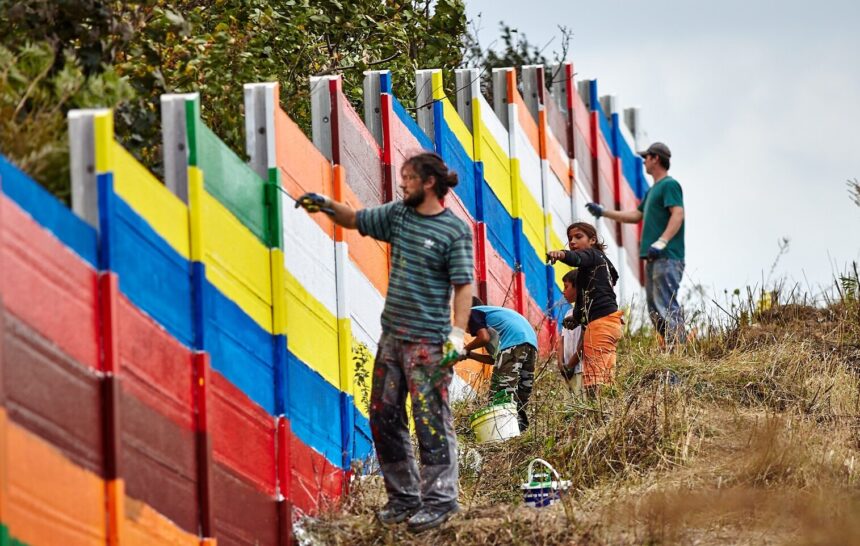
(Daniel Grúň): My study investigates how emancipatory pedagogies developed within the unofficial art scenes of East-Central Europe in the 1970s and continue to shape contemporary artistic and curatorial practices. I argue that these earlier pedagogical experiments—exemplified by the creativity courses of Dóra Maurer, Miklós Erdély, and the amateur-centered activities of Július Koller—sought to dissolve hierarchical distinctions between teacher and student, encourage collective creativity, and create open, flexible zones of learning at the margins of socialist institutions.
In the present day, these legacies are reactivated in socially engaged art that similarly aims to generate dialogical, inclusive, and situationally responsive spaces. My main focus is on the video archives of artist-activist Tomáš Rafa, whose documentation of community-based workshops and public actions—especially those addressing segregation and exclusion in Romani settlements—serves both as artistic practice and as an educational resource. Rafa’s archives, along with other initiatives, demonstrate how contemporary art constructs “zones of contact” that foster collective agency, critical reflection, and emancipatory learning.
Both historical and contemporary practices share a commitment to transforming conditions of exclusion through collaborative creativity. While earlier experiments operated at the edges of socialist cultural structures, today’s artists confront new forms of bureaucratization and social inequality. In both contexts, archives—whether historical or digitally produced—become crucial pedagogical instruments that make alternative forms of knowledge, participation, and freedom visible and actionable.
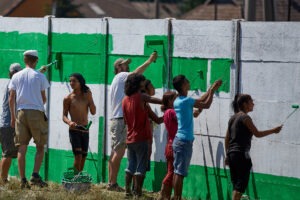
(Jorge Lucero): My piece tries to tease out the possibilities of schooling and the school as an artistic material, particularly for a conceptual art practice. By taking permissions from a litany of conceptual artists whose practices echo the materiality of schooling, education, and teaching, I make a proposal that there can be a conceptual artist in every school. In the end, that persons role is to constantly test the pliabilty of the school as an artistic materia both for the sake of art and the sake of the educational event/project. The part that is “natural” for this overlap, and therefore could have the most significant social impact, is the part where contemporary artists are already attempting to invoke and cause the change that might be possible through schools. Because schools already have many of the dynamic properties that artists (who might consider themselves social practitioners) are looking for. Things like relationality, time as material, grappling with ephemerality and the difficulty of documentation, social and activist impact, etc.
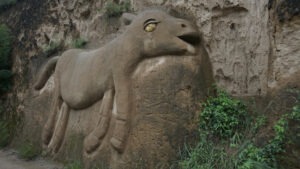
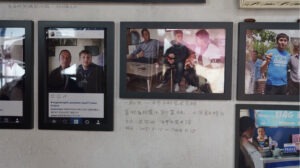
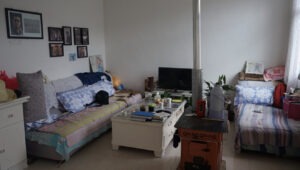
(Yanhua Zhou): My contribution to this anthology is a chapter focusing on a case study of a contemporary community art project in rural China, the Shijiezi Art Museum. This “museum” was established in 2009 by artist and village native Jin Le, who passed away during the pandemic. Jin implemented various initiatives: installing sculptures in public areas, involving villagers in art activities, decorating homes to serve as exhibition spaces and teaching residents to create art. His aim was to transform the impoverished village through aesthetic education.
In this chapter, I frame the concept of aesthetic education in meiyu, a term proposed by Cai Yuanpei, a leading Chinese liberal educator in the Republican period, early 20th century. This concept emphasizes cultivating human sensibilities could function similarly to religion.
While meiyu emphasized the moral and ethical roles of art beyond mere beauty, it also highlighted art’s social and public functions. This chapter argues that the Shijiezi Art Museum’s meiyu efforts have facilitated community reconstruction, strengthened social bonds among residents and promoted dialogue by reestablishing their communal identity.
(Carlos Garrido Castellano and Elena Merino Rivera): In our chapter, we examine a very specific question: what happens when listening occupies center stage and is understood as a collective practice of political and social formation. Drawing on the case of the Cádiz Carnival, a centuries-old festivity that offers one of the most active forums of sociopolitical mobilization in the context of Spain, we advance the concept of radical listening as a form of informal pedagogy that operates outside conventional institutional frameworks.
What we aim to highlight—also in dialogue with what has already been said about art and education in the book—is that here pedagogy does not emerge from an authoritative position, but from a horizontal, oral, and situated practice. Carnival songs do not simply comment on or represent reality; they actively shape it, by setting the tone of public debate, deciding what deserves attention, and producing shared forms of political sensibility.
Through the analysis of two recent carnival groups by Antonio Martínez Ares, we show how music, humor, and collective listening activate processes of identification, dissent, and memory that function as a form of non-formal civic education. In this sense, our chapter connects with other contributions in the volume by shifting the focus away from the artwork as an isolated object and toward the material and affective conditions that make critical pedagogy from below possible.
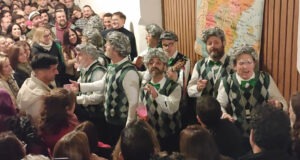
We would like to begin by showing an example of this pedagogical listening through a clip that presents a fragment of a street carnival group during this past February’s carnival. In this case, the group criticizes—through humor—the shortcomings they perceive in a clearly declining public education system, as well as the dangers of the far right ideologically reshaping the educational foundations of young people. Notice the closeness and the audience’s attentive, receptive attitude.
.
(IG): Your work shows how artists around the world are engaging the intersection of art, pedagogy, and activism to respond to urgent issues such as war, climate change, authoritarianism, and attacks on education. Working from your own geopolitical and cultural context, what do you see as the most significant current threats to education and art today? How can pedagogy function as a tool for resistance or collective care within artistic, curatorial or museum practice?
(DG): From today’s Slovak perspective, the most significant threats to education and art come from the growing politicization of contemporary art and an erosion of democratic norms. We are witnessing attempts to centralize cultural institutions (in Hungary the mission has been already successfully achieved), discredit independent media and NGOs, and stigmatize educators and artists who address topics such as minority rights, social exclusion, or the climate crisis.
These pressures do not simply restrict funding—they delegitimize critical thinking itself. As you know, Hungary and Slovakia are the most loudly authoritarian in pro-Russian rhetoric and erosion of the weak democratic principles. In this environment, pedagogy becomes more than a method—it becomes a form of resistance and collective care. At a time when cultural institutions are being kidnapped by ulra-right-wing and anti-liberal puppets, pedagogical practice offers an alternative infrastructure. It raises strong critical voices and builds forms of solidarity that resist the fragmentation encouraged by populist politics.
Most importantly, it affirms that art and education are public goods, not ideological battlegrounds. In the current climate in Slovakia—marked by distrust, polarization, and attacks on independent culture—pedagogy helps us hold onto a vision of collective agency. It reminds us that freedom is not a static condition but something practiced, negotiated, and defended together.
(JL): This is an interesting question because what first comes to mind is the more unspectacular parts of being in a school with so many different types of people. I’m not sure that I think of it as a “threat” per se, and I also don’t think that it’s new, although I certainly think it’s current (and has been, maybe for all the time that education has been formalized, at least in the states).
And that is the fact that school is consistently understood as a place where you go to get prepared for life–that is for the next part of your life–as opposed to thinking about it as life itself. But young people are full people, with full, active thoughts and lived experiences. As such, it falls to the teachers to merely put a bracket around that and come alongside the students to do the work of living within the reality and materiality of being at school together.
Yes, it is obvious that some things will be taught and transferred from one person to another, but that is only a small percentage of what happens in schools on a day to day basis. The rest of the time is mere life and as good artists we cannot ignore that. The biggest threat to education and art today is something that has been a threat to those things for generations, and that’s not paying attention because we’re looking ahead or away.
(YZ): I have ten years of experience working as a faculty member at an art college in China, and my research has primarily focused on China. I am therefore quite familiar with both the educational system and the art ecology there. In recent years, one of the major threats to both education and art has been the intensifying ideological control, which has resulted in inflated nationalist sentiment.
In the realm of education, students’ freedom of speech—long a sensitive issue in China—has become increasingly restricted over the past decade. In the field of art, contemporary Chinese art has been officially constrained by the government. On the one hand, many independent contemporary art practices have been suppressed or banned. On the other hand, the state actively promotes its own discourse of “contemporary art.”
The first type of state-preferred contemporary art emphasizes close connections with recent technological development. This approach is viewed as a means of promoting national confidence and technological nationalism. The second type is “rural reconstruction through art.” In this case, the government has institutionalized previously independent rural community art projects, reshaping them to align with the official discourse of rural revitalization. As a result, art has increasingly become a tool serving political agendas.
Pedagogy can function as a form of resistance or collective care. However, such possibilities are extremely limited in China, where the education system has never been independent. In socialist China, education served ideological purposes. In the post-socialist period and today, although the CCP allows the existence of private schools, both public and private educational institutions remain under the Party’s leadership. The public education system in particular maintains overwhelming dominance.
The cases I examine in this anthology operate in a kind of underground condition. These initiatives must constantly navigate grey areas in order to sustain their daily operations.
Taking the Shijiezi Art Museum as an example, funding is the most critical issue for maintaining the project. Jin Le sought to preserve the museum’s independence; however, when self-funding became unsustainable, he was compelled to adapt the project to local government preferences by promoting it as a model of rural revitalization in impoverished northwestern China. Being within the institution provides safety and support, not only financially but also politically. This, however, has become the fate of many independent art projects today.
This is why I chose to write about these cases: to make their conditions visible and to allow more people to understand the difficult negotiations behind their continued existence.
(CGC & EMR): Building on what has already been mentioned about the precarization of education and creativity, and touching on the discussion on the pressures placed on cultural autonomy, from our context one particularly significant threat stands out: the neutralization of conflict. Both art and education tend to be institutionally accepted only when they are rendered harmless, depoliticized, or reduced to consumable “content.”
In the case we examine, the Cádiz Carnival has been affected by processes of spectacularization, indirect censorship, and commercialization. These processes can be seen as a form of neutralization of conflict, yet our example also continues to preserve spaces of resistance precisely because collective listening cannot be fully regulated or controlled. Pedagogy, in this context, does not consist in delivering the “right” message, but in creating the conditions for a community to listen to itself, including its tensions and contradictions.
We understand pedagogy as a tool of resistance when it keeps meaning open rather than closing it down, and when it fosters shared time, attention, and affect. From this perspective, collective care is not a therapeutic add-on, but the possibility of sustaining a common political conversation outside productivist rhythms and logics of performance.
Another threat to freedom of expression in the Carnival of Cádiz is violence. Although it is still an isolated incident, this year there have been reports of verbal attacks against groups by people opposed to their fundamentally transgressive messages. We also wanted to share a video of the group known as “Chirigota de Casapuerta,” since both the performers and their audience were assaulted by a neighbor who did not like their message and threw them a bucket of bleach.
(NB): What responsibilities—and risks—come with merging education, activism, and art in this way? Can you share an example from your own current work where pedagogical approaches opened up new forms of engagement or political possibility?
(DG): Merging education, activism, and art carries both responsibilities and risks. On the one hand, such work can create powerful “zones of contact” where marginalized voices gain visibility, communities co-create knowledge, and political issues become tangible through shared experience. On the other hand, it also exposes participants and facilitators to vulnerabilities: the risk of instrumentalizing communities, perpetuating asymmetrical power relations, or having politically sensitive work misinterpreted or co-opted. Especially in a climate where cultural institutions are under increasing pressure from illiberal politics. When the state frames critical pedagogy as ideological or threatening, artists and educators must negotiate questions of safety, representation, and the ethical limits of intervention.
Another responsibility lies in ensuring that pedagogical practices do not simply perform participation but actually redistribute agency, as the historical examples in the text—Maurer, Erdély, Koller—attempted to do. The challenge is to create learning situations where knowledge is not extracted from communities but generated with them, and where documentation—archives, films, or exhibitions—does not reduce participants to symbolic material.
The cases of artistic pedagogy I discuss in my text are facilitating a series of small-scale community workshops on visual memory and local history. In that way they used a pedagogical approach inspired by the emancipatory models discussed in the text. In some of them such as Open Studio with Ilona Németh I also actively participated. In other cases I served as a mediator of archival material that we shared by performative means. Rather than beginning with a predetermined curriculum, we worked with open form, using unconventional means and interdisciplinary approaches. Tomáš Rafa with his project Art Aktivista returns to the same spot each year. This shifted the workshop from a conventional educational format into a process of co-research and co-growth.
(JL): Ah, this is a great question because it points to the inherent sloppiness of the thing I’m describing in the previous question. School is real life and if art is done right, it also comes from that living. As such, difference rubs up against difference, and the outside world seeps in, and the anxieties of existence emerge, and people are afraid. In the work I do, I make institutional literacy as important as learning whatever subject is the subject of the course, or the meeting, or the moment.
I don’t just aim to say, here’s the material you need to learn to pass this class or get tenure or successfully get this grant, etc. I also say, let me explain the mechanisms that are at play here and this is how power is held and weilded and this is YOUR role in the whole situation. And then, if I can, I open as many doors as I can for people to walk through them, especially people who otherwise wouldn’t have access to those inner spaces.
This was something that was done for me as a first generation mexican kid who no one in his family had gone to college, and who had no legacy or forbearers who trailblazed for me.
(YZ): For many people in China, the most accessible way to understand—and really benefit from—socially engaged art is through community-based art education. What do I mean by that? I think it works in two ways. First, it means making art in the community, in real places, and inviting people to participate. When people join the process—when they paint, build, discuss, or create together—they don’t need complicated theory to understand what socially engaged art is. They experience it directly, in their everyday lives.
Second, community art education also includes public lectures, small seminars, or informal tutoring that take place right where people live. These activities help local residents gain some basic understanding of art—especially contemporary art, which many people often say is “too hard to understand.” But I think contemporary art is actually very important, because it helps people reflect on their lives and imagine different possibilities. Art may not solve material problems immediately, but it can make life feel more meaningful. For me, this is where art, activism, and education come together. Life is not just about surviving—it should have meaning.
(CGC & EMR): One of the main responsibilities—and also one of the central risks—of merging education, activism, and art is avoiding romanticization. In the chapter, we stress that carnival is not inherently emancipatory: it can reproduce hierarchies, exclusions, and silences. This is crucial in a moment when the far-right is appropriating carnivalesque attitudes and strategies. Acknowledging this is part of an ethical pedagogical stance.
The risk becomes particularly visible when these domains are combined without attending to their material conditions: who gets to speak, who is expected to listen, and who remains unheard. In our current work, both in research and teaching, we try to translate the logic of radical listening into more formal educational contexts—for instance, by working with popular sonic materials not as cultural artifacts to be explained, but as living spaces of debate.
In these situations, the pedagogical task is not to teach about carnival, but to partially reproduce its logic: shared attention, ambiguity, discomfort, humor, and conflict. It is there that new forms of political engagement emerge—not necessarily in the form of activism, but as profound transformations in how people learn to listen to others and to the collective.
(IG): Thank you to each of you for sharing your thoughts. We would like to invite the listeners to explore the other components to this special 2026 FIELD issue. Written contributions are from authors and topics not explored in our anthology. As such, these essays expand discussion on: radical pedagogy as a practice of ‘feltness’ – an ethics and political committed to queer-feminist, anti-racist, and anti-colonial intimate practice; on community-based Black arts institutions as sites of fugitive pedagogy; and on art practices in the US-Mexico borderlands as pedagogical through feminist and trans-Latinex commitments, considering pedagogical art as shared practices of labor and collaborations.
(NB): Izabel and I are also exploring the possibility of developing a second volume on pedagogical art, so stayed tuned!
Noni Brynjolson is an Assistant Professor of Art History at Minnesota State University Moorhead. She has published essays in a number of edited books and journals and is a member of the editorial collective of FIELD: A Journal of Socially Engaged Art Criticism.
Carlos Garrido Castellano works as a lecturer in the Department of Spanish, Portuguese and Latin American Studies at University College Cork, Ireland. He is also Research Associate at VIAD (University of Johannesburg, South Africa). His research focuses on post/decolonial criticism and the socially transformative potential of contemporary cultural production.
Izabel Galliera is the Dorothy and Dale Thompson Missouri Endowed Associate Professor of Art History at the University of Missouri-Kansas City (UMKC). She is the author of Socially Engaged Art After Socialism: Art and Civil Society in Central and Eastern Europe (2017 and 2022).
Daniel Grúň is an art historian, curator and writer, currently employed as Associate Professor at the Academy of Fine Arts and Design in Bratislava and the Institute of Art History, Slovak Academy of Sciences. He is in charge of the Július Koller Society and co-curated the artist’s first international retrospective “Július Koller: One Man Anti Show” MUMOK/Vienna, Museion/Bolzano in 2015-2016.
Jorge Lucero currently serves as Professor of Art Education in the School of Art & Design and Associate Dean for Research in the College of Fine and Applied Arts, both at the University of Illinois, Urbana-Champaign. In 2023, he was named the National Art Education Association’s Higher Ed Educator of the Year.
Elena Merino Rivera completed her Ph.D. at Universidad Complutense de Madrid, focusing on carnival music from Cádiz that centers on the figure of Antonio Martínez Ares. She is Director of the Language School of the Universidad Internacional de La Rioja (Spain), where she teaches as part of the MA in Spanish as a Foreign Language Acquisition.
Yanhua Zhou is a Professor of Art History and an affiliated faculty in the Department of East Asian Studies at the University of Arizona. She is the author of Artistic Engagement: The Aesthetic Paradigm of Socially Engaged Art (China Social Science Press, 2017). Taking an interdisciplinary approach, her research delves into the art and geographic politics of contemporary art in Asia, global socially engaged art in a transnational context, affective infrastructural studies and non-human agency in art.