Editorial: Radically Expansive Possibilities for Pedagogy as Art
Izabel Galliera and Noni Brynjolson
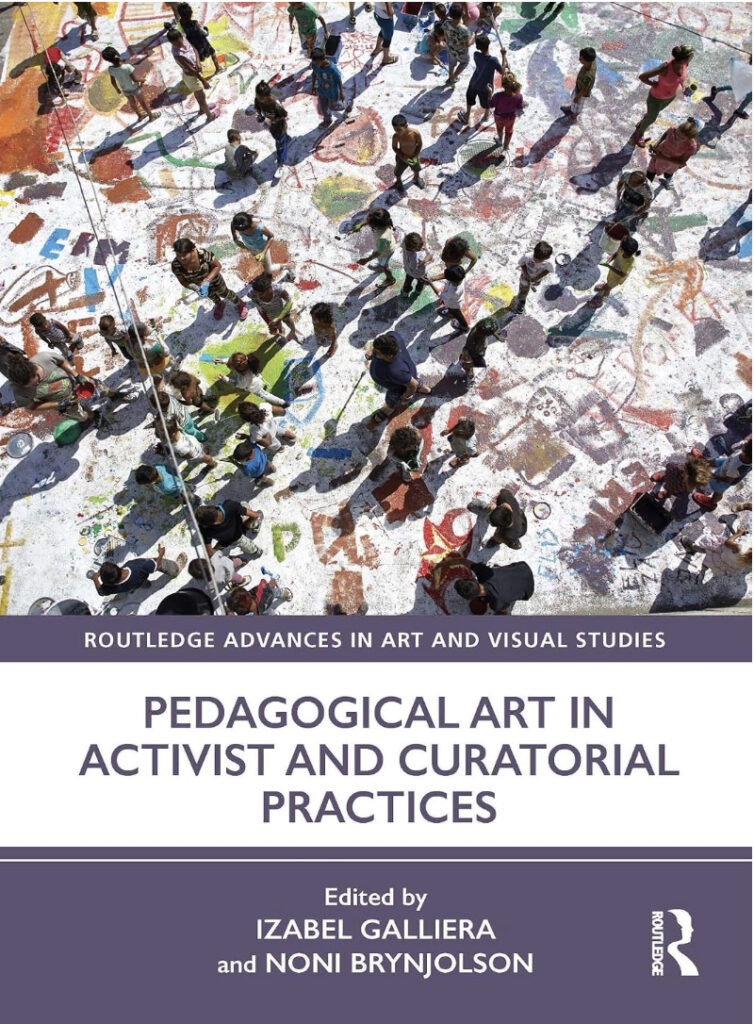
In 2025, Routledge published Pedagogical Art in Activist and Curatorial Practices, a collection of seventeen essays and a detailed introduction that we–Izabel Galliera and Noni Brynjolson–co-edited. This special issue of FIELD: A Journal of Socially Engaged Art Criticism is dedicated to the generative links between pedagogical art and activism, which are at the core of our anthology. The essays come from twenty-one authors, with a diverse range of academic backgrounds and geographic locations. Art historians, curators, critics and artists explore the dynamics between art, education and the potential for social transformation.
Chapters in the book reveal interconnected concerns related to institutional power structures, systemic racism, sexism and gender biases in art institutions, exclusionary tactics of neoliberal corporate interests and the politicization of culture in authoritarian regimes. Contributors address key debates and conversations on this topic including the lessons that can be learned from exploring global histories of critical pedagogy, the possibilities and constraints of institutional critique and transformation within museums, universities and other educational institutions, and the many ways in which contemporary pedagogical art has intersected with art and activism around the world.
Since many of the essays in the anthology connect with the aims of socially engaged art, in publishing this special issue, our goal is to share these ideas with FIELD’s readership. We seek to further explore the potential of pedagogical art as a transformative institutional tool with the ability to activate discursive spaces for generating, sharing and amplifying knowledge as a powerful form of collective resistance. With this in mind, we have invited several of the book’s authors–Yanhua Zhou, Daniel Grúň, Jorge Lucero, Carlos Garrido Castellano and Elena Merino Rivera–to contribute to this special issue in the form of an audio roundtable conversation.[1] As a way to expand upon major themes in the book, we have also invited contributions from four other authors–Tanisha M. Jackson, Melissa Ferrer Civil, Adetty Pérez de Miles and Amanda Parmer[2]–whose work suggests far-reaching possibilities for pedagogical art.
Both the book and this special issue are intended to respond to recent neoliberal attacks on freedom of expression in schools and art institutions, and on the humanities in higher education, which we both have encountered firsthand. In addition, participants in the audio roundtable discussion respond to the ideological control of education by right-wing nationalist governments. In using the term ‘pedagogical art,’ we examine the potential for pedagogy as both medium and subject matter, and look at practices that unfold at the intersection of art, curatorial practice and activism and that respond to these attacks. Many of the contemporary practitioners that make this type of work seek to produce, disseminate and activate critical and transformative forms of knowledge. As co-editors we ask three key questions: What are the historical legacies, theories and philosophies of pedagogy that reveal its critically generative power across diverse cultural, artistic and socio-political contexts? What are the ways in which pedagogy provides tools in the transformative processes of institutional practices that not only question the neo-liberalization of educational institutions and the perceived neutrality of art museums, but also reveal their crucial role in social, racial, ethnic and environmental justice? And how might pedagogy activate discursive spaces for generating, sharing and amplifying knowledge as powerful collective forms of resistance in various art activist platforms across various geopolitical localities?
We employ ‘pedagogical art’ as a generously accommodating term that encompasses various forms of social art practices that act as advocacy tools to advance social justice on issues and concerns both inside and outside established institutional structures. In this context, ‘pedagogy’ signals a series of specific tools, strategies and modes of operation that enhance the life-long process of learning. Educational psychologists understand “learning” as a complex process that includes “observed behavior, brain processes, or self-constructed ideas and concepts.” On the other hand, as director of learning at the Tate Museum, Anna Cutler explained, education has materialized in “the structures and systems established to manage and guide learning: what we teach/learn; why we teach/learn it; and how we teach/learn. These are structures based on a set of socially determined values.”[3]
Looking specifically at contemporary cultural institutions, such as art museums, Cutler argues that “learning” needs to shift from the margins to the heart of these institutions. This shift requires letting go of the idea of educational departments and that of departmentalization so that “professionals (formerly known as education departments) would therefore shift from being the guardians of learning for an institution and passers-down/on/across information, to becoming central to the ‘real’ business.” Moreover, Cutler advocates that art museums should aim “for depth over breadth” and for “the quality of a learning experience over numbers passing through.” And finally Cutler makes a point to distinguish between museum spaces and traditional educational institutions: “we need to let go of feeling the need to replicate educational systems and models, unless they serve the purpose of cultural creative learning.” Cutler’s points resonate with many of the essays in this volume focused on a number of artistic initiatives that illuminate pathways in shifting pedagogy from a peripheral position to a central one.[4] This shift has increasingly been recognized and defined by artists, curators and art historians from around the world.
This special issue comes at a time when institutions of learning around the world are under constant attack, whether through de-funding, censorship, or the perpetration of narratives that undermine their aims. Many of the contributors comment on this, and on how attacks on education have coincided with other issues such as war, climate change, and the rise of authoritarianism. The five audio roundtable participants who are contributing authors in the anthology addressed the threats to education and art today. And they recognize pedagogy as a tool for resistance and collective care.
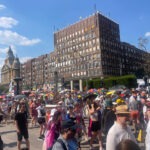
We recorded the round table on March 2, 2026 just a little over a month before the historic Hungarian elections occurred on April 12 that marked the end of Orban’s sixteen-year-illiberal democracy and extreme right-wing populism. Inspired by Orban’s governance, Slovakia’s current prime minister has increasingly adopted a pro-Russian foreign policy, centralising and exercising control over media and cultural institutions. Art historian, curator, writer, and Associate Professor in Bratislava, Daniel Grúň highlights the vital role pedagogy as art practice plays in sustaining solidarity and alternative structures in Slovakia. A similarly oppressive approach to education increasingly used to promote the government’s ideological and nationalist agenda, has also characterized China over the last ten years. Art historian and Assistant Professor of Asian Studies at Kennesaw State University, Yanhua Zhou discusses the case of the alternative pedagogical art project Shijiezi Art Museum which, in order to survive financially, had to adapt to principles promoted by the government, thus forced to define a new identity. Such examples illustrate the complex negotiations and compromises that artist or curator-led independent initiatives undergo within an authoritarian or illiberal socio-political context when confronted with questions of sustainability and material precarity. Carlos Garrido Castellano (Professor and Head of the Department of Spanish, Portuguese and Latin American Studies at University College Cork) and Elena Merino Rivera (Director of the Language School of the Universidad Internacional de La Rioja in Spain) point to the increasing threat to art education in capitalist democracies, where spectacularization and commercialization aim to neutralize critical thinking and debates. They examine the pedagogical dimension of the Cádiz Carnival in the Andalusian region of Southwestern Spain. They point to the carnival’s “collective listening” as its pedagogical dimension that resists regulation and control. Jorge Lucero, an artist teaching at University of Illinois, articulates a conceptual approach to art pedagogy that blends art and life as it takes the everyday physical space, its people and the discursive dimensions of the university as the medium for an engaged pedagogical practice. While operating within different socio-political contexts, similar infrastructures of care are explored in two of the newly commissioned essays for this FIELD issue, by Tanisha M. Jackson and Melissa Ferrer Civil where care, mutuality and resistance comprise forms of fugitive pedagogies that are integral components of an organization’ s institutional design.
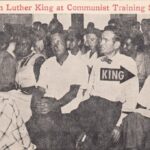
A popular and rapidly growing theoretical concept in African American Studies, “fugitive pedagogy” has an important historical legacy. In his 2021 book Fugitive Pedagogies: Carter G. Woodson and the Art of Black Teaching, author Jarvis R. Givens points to the roots of fugitive pedagogy in the fugitive slave that “engaged in both physical and psychic forms of flight” in a reality ruled by antiliteracy laws, which criminalized reading and writing by black Americans. Fugitive pedagogy continued to manifest as the “constant against the persistent violence of white supremacy and that might be understood as black freedom.”[5] Givens’s book traces fugitivity as a lived and embodied experience, in the historical records of black education, in the discourse of black American teachers and educational communities. “They named schools after fugitive slaves, and these historical figures repeatedly appear in curriculum content developed by black teachers […] Black education was a fugitive project from its inception–outlawed and defined as a criminal act regarding the slave population in the southern states and, at times, too an object of suspicion and violent resistance in the North.” As Givens writes: “Escape is an activity; it’s not an achievement.”[6]
In this issue, Jackson’s essay “Fugitive Infrastructures: Black Feminist Art Ecosystems and Community Cultural Centers as Counter-Universities” explores what she terms “organizational insurgency” and “insurgent sociality” in the context of the Community Folk Art Center (CFAC) at Syracuse University where she is the Executive Director. By combining Fred Moten’s fugitivity and bell hooks’ engaged pedagogy and her own framework of Black women’s art ecosystems[7] Jackson reimagines Black cultural centers as “fugitive infrastructures” where Black feminist art practice becomes “political education and where care, mutuality, and resistance are not afterthoughts but constitutive features of institutional design.” Jackson’s analysis that foregrounds “liberationist pedagogy as inseparable from the aesthetics of Black cultural production,” shares affinities with Melissa Ferrer Civil’s lyrical essay, “Wade in the Water: A Constellation on the Artist as Culture Worker and Practitioner of Fugitive Pedagogy.” Civil’s contribution to this special issue of FIELD is “a constellation” of short poems, critical and personal reflections, and prose. Named the 2024 inaugural poet Laureate of Kansas City, MO, Civil curates an abolitionist arts and organizing event series called A Nation in Exile. Civil also directs the Black Abolitionist freedom school B-REAL (Black Radical Education for Abolition and Liberation) that was launched in February 2025 by the Kansas City Defender a Black-led movement media organization, as a direct response to rising book bans on Black knowledge. In its inaugural edition, it brought together black revolutionaries aged 11 to 73 who followed a 14-week curriculum designed to teach organizing skills, build community, and reclaim Black radical education.[8]
Through their work as an organizer for social justice movements and the leader of the Kansas City-based B-REAL academy, Civil both embodies and actively sustains a “fugitive infrastructure” as theorized by Jackson in her essay within the historical legacy of Black education. As Civil writes:
It is from the perspective of one born into fugitivity that I examine the impact and intentions of these projects while highlighting the ways artists of all disciplines employ a level of fugitive pedagogy to educate and liberate in the undercurrent and the mainstream.
Guided by revolutionary poetry, Civil’s writing literally “walks off the page and into the streets.”
Jackson’s and Civil’s essays on fugitive pedagogies enter in dialogue with Amanda Cachia’s chapter, “Smoke and Mirrors: Fugitive Crip Way-Finding and Artful Deception in the Museum,” published in the 2025 anthology. Cachia examines four exhibitions of immersive installations by Vancouver-based non-visual learner Carmen Papalia by unpacking the potential connections that could be explored between the concept of fugitivity and the realm of disability studies.[9]
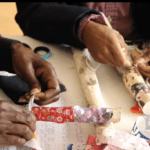
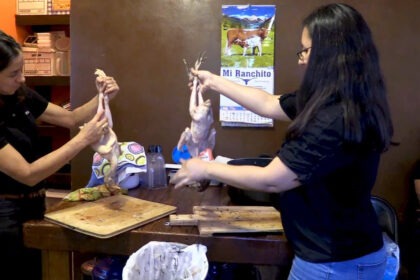
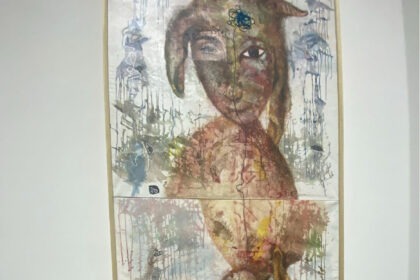
In her contributing essay, Adetty Pérez de Miles conceptualizes pedagogical art as unfolding and emerging “through relations of co-labor, interdependence, visibility, and care across both institutional and extra-institutional contexts.” Pérez de Miles is Associate Professor and Program Coordinator of Art Education in the School of Art and Design in the College of Fine Arts & Communication at Texas State University. Here, she focuses on two socially engaged art projects that center around feminist and trans Latine identities in the Mexico/US borderlands. The concepts of communal knowledge and transformation are highlighted through these practices. The women’s art collective DouglaPrieta Trabaja (DPT), based in Agua Prieta, Sonora, works across a wide range of media, including video installations, printmaking, papermaking, performance and sculpture. Their piece Caldo de Pollo (Chicken Soup) (2020), documents the seemingly simple act of making soup, breaking down each step and focusing on the process as an act of shared domestic labor–killing the chicken, plucking its feathers, preparing the broth, harvesting vegetables from the garden, and then eating together. Citing Gloria Anzaldúa, Pérez de Miles writes about how this piece foregrounds the kitchen as a space of conocimiento, or transformative knowledge: “where borderlands subjects come to know themselves and each other through practices of care, endurance, and shared risk, rather than through institutional display.”] Another example highlighted by Pérez de Miles, by artist Jay Lynn Gomez, Butterfly Dream (2025), focuses on trans Latine communities in Los Angeles and references the classic Chinese Daoist parable by Zhuangzi to examine states of transformation and the “instability of selfhood.” Pérez de Miles connects this with Anzaldúa’s concept of nepantla, which describes an intermediate space or site of transformation.
Several of these concepts were explored in our 2025 anthology. Scholar Andrea Lepage also examined borderlands pedagogy, defining this as “an educational approach that eschews totalizing narratives in favor of embracing diverse perspectives to offer a more comprehensive understanding of human experiences and histories.”[10] Lepage employs the concept of nepantla to examine the potential for academic galleries in universities to act as in between spaces, sites in which identities are rethought and remade, as topics related to the border region were explored and analyzed.
This was a key theme throughout the book, examined through a number of artworks in which artists consciously integrate these modes of teaching and learning, many of whom cite Paolo Freire’s work in challenging transmission models of pedagogy. Several of the authors in the book wrote about the borderlands and, similarly to Pérez de Miles, highlight the possibility for such interventions to challenge all-encompassing systems of control through creative expression and shared labor. Amanda Parmer’s essay for this issue explores this topic in depth, looking at the creative possibilities involved in moving across institutional or narrative boundaries–what she refers to as “diegetic leak.”
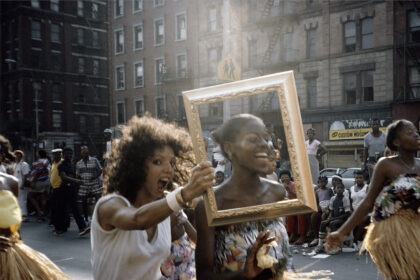
Parmer is currently a PhD Candidate in Media, Culture, and Communication at New York University and has served as the Director of Programs at Independent Curators International and as the inaugural Curator of the Vera List Center for Art and Politics. In her essay for this issue, she looks at the disciplinary boundaries between the world of a story or an artwork, and the external world around it. Parmer draws upon the writing of Katherine McKittrick in looking at how creative expression can challenge these boundaries. Connecting with key concepts examined by other authors in this issue around fugitive pedagogies, this analysis of boundaries emphasizes how the rules associated with institutions and disciplines that structure them can be rewritten and transformed. One example Parmer focuses on is Lorraine O’Grady’s piece Art Is…, involving a parade in Harlem in the 1980s in which performers handed out gilded frames to audience members, who were invited to participate in the work, placing themselves into its narrative and symbolic content. Returning to Civil’s essay, the work shows the power of fugitive pedagogy and expansive possibilities for pedagogical art–it allows people to “enter in, in their own way, as they are, valid and believed.”
Izabel Galliera is the Dorothy and Dale Thompson Missouri Endowed Associate Professor of Art History at the University of Missouri-Kansas City (UMKC). She is the author of Socially Engaged Art After Socialism: Art and Civil Society in Central and Eastern Europe (2017 and 2022).
Noni Brynjolson is an Assistant Professor of Art History at Minnesota State University Moorhead. She has published essays in a number of edited books and journals and is a member of the editorial collective of FIELD: A Journal of Socially Engaged Art Criticism.
Notes:
[1] Roundtable participants include the following authors whose essays were published in Pedagogical Art in Activist and Curatorial Practices, edited by Izabel Galliera and Noni Brynjolson (New York: Routledge, 2025): Yanhua Zhou, “Aesthetic Education in a Community Art Project in Rural China: A Case Study of the Shijiezi Art Museum,” Daniel Grúň, “Archives as Didactic Tools: Contemporary Art and the Legacy of Emancipatory Pedagogies in East-Central Europe,” Jorge Lucero, “A Conceptual Artist in Every School,” Carlos Garrido Castellano and Elena Merino Rivera (with Santiago Moreno Tello who was not featured in the roundtable conversation), “Radical Listening as Collective Education: Learning from Cádiz Carnival Music.”
[2] Authors invited to contribute to this special issue of FIELD include: Tanisha M. Jackson, “Fugitive Infrastructures: Black Feminist Art Ecosystems and Community Cultural Centers as Counter-Universities,” Melissa Ferrer Civil, “Wade In The Water: A Constellation on The Artist as Culture Worker and Practitioner of Fugitive Pedagogy,” Adetty Pérez de Miles, “Caldo de Pollo and Butterfly Dreams: Trans & Feminist Nepantlera Movidas,” and Amanda Parmer, “Who Defines the Disciplinary Area When the Diegesis Leaks?”
[3] Anna Cutler, ‘What Is To Be Done, Sandra? Learning in Cultural Institutions of the Twenty-First Century’, in Tate Papers no.13, https://www.tate.org.uk/research/tate-papers/13/what-is-to-be-done-sandra-learning-in-cultural-institutions-of-the-twenty-first-century, accessed 7 October 2024.
[4] Ibid.
[5] Jarvis R. Givens, “Introduction: Blackness and the Art of Teaching” in Fugitive Pedagogy: Carter G. Woodson and the Art of Black Teaching (Cambridge MA and London, England: Harvard University Press, 2021).
[6] Ibid.
[7] Tanisha M. Jackson, Black Women’s Art Ecosystems: Sites of Wellness and Self-Care (Champaign: University of Illinois Press, 2025).
[8] [7] “B-REAL Academy Launches: A Radical Space for Black Study and Abolitionist,” The Kansas City Defender, February 2025:
https://kansascitydefender.com/aboltion/abolition/b-real-academy-launches-a-radical-space-for-black-study-and-abolitionist-education/, accessed 28 June 2026.
[9] Amanda Cachia, “Smoke and Mirrors: Fugitive Crip Way-Finding and Artful Deception in the Museum,” Pedagogical Art in Activist and Curatorial Practices, edited by Izabel Galliera and Noni Brynjolson, New York: Routledge, 2025.
[10] Andrea Lepage, “The Classroom as Borderland: Borderlands Art Pedagogy,” Pedagogical Art in Activist and Curatorial Practices, edited by Izabel Galliera and Noni Brynjolson, New York: Routledge, 2025.