Editorial | Spring 2026
Welcome to the Spring 2026 edition of FIELD. I’m especially pleased to introduce this issue, focused on the interrelationship between art and pedagogy, because it has been edited by FIELD collective member Noni Brynjolson, currently teaching at Minnesota State University in Moorhead, and Izabel Galliera, a curator and art historian teaching at the University of Missouri in Kansas City. Noni and Izabel are both distinguished scholars of contemporary socially engaged art and have contributed a great deal to the emerging literature in the field. This special issue carries forward an important set of questions that Noni and Izabel first introduced in their 2025 Routledge anthology Pedagogical Art in Activist and Curatorial Practices, which explores the complex intersection of art and pedagogy in the gallery, the classroom and the broader social world.[1] The linkage between art and pedagogy is, of course, rooted in the origins of modernism itself. It was Friedrich Schiller who famously helped inaugurate this connection in his influential concept of art as a form of “aesthetic education” that would heal the fragmented human self, torn asunder by the divisive forces of nascent capitalism. The connection between art and pedagogy persisted throughout the twentieth century, in the work of figures like John Dewey, Rabindranath Tagore at Santiniketan, and institutions such as the Black Mountain School, the Bauhaus and Vkhutemas, all of which contended that art could be understood as a form of educational praxis. More recently we encounter the so-called “educational turn” in art during the 1990s, which could more aptly be named the educational return, since issues of art, community and education came to the fore throughout the 1960s and ‘70s.
This issue is especially timely because the last five years have witnessed an unprecedented attack on the institutions of higher learning in the U.S., the U.K. and parts of Europe. These attacks have emerged as the consequence of two, interrelated forces. First, they are the result of the rampant financialization of higher education, as an emerging profit center for global capital. This is evident in the plight of Goldsmiths University in London. This venerable institution, with its storied history of innovation in the arts and humanities, has been subjected to a series of punishing economic “restructurings” by University of London management, which have decimated its staff and threaten to sink the institution entirely.[2] An almost identical pattern has unfolded at universities and colleges across the United States.[3] The second factor involves the dramatic escalation of far right attacks on higher education and the liberal arts. These have unfolded with particular ferocity in the United States, where the Trump regime and its acolytes have sought to revive the Culture War strategies of the 1990s in their effort to extinguish any meaningful criticism of their quest for authoritarian power. This is typified by Ron Desantis’s attack on the New College of Florida, which he has sought to transform into a platform for promulgating far right propaganda under the guise of academic “scholarship”.[4] As we’ve seen over the past year or more, the initial stages of the authoritarian takeover of higher education has often proceeded through the deliberate weaponization of charges of “antisemitism” as a tool to quell dissent, a tactic made all the more tragic because it’s being wielded by a broader conservative movement that has explicit ties with neo-fascists.[5]
In the United States, at least, we might define our current historical moment as the period of the “Great Reaction,” reflecting the attempt by the far right to seize power and erode democratic systems of government. What we are witnessing in today’s headlines is the apotheosis of a concerted strategy that has been developing for several decades through an alliance conservative billionaires, Christian nationalist and neo-fascists who view the forms of progressive social change that have unfolded since the 1960s as a betrayal of the innate supremacy of white men. Their antipathy towards broader forms of human liberation extends back even further, of course, to the New Deal (a constant bête noire of the far right), the Progressive Era and even the Civil War (evident in recent attempts to overturn the Fourteenth Amendment). It is the 1960s, in particular, which has often borne the brunt of their ire. This period was characterized, of course, by the pervasive emergence of new social movements devoted to the liberation of women, people of color, and the gay and lesbian community (later to evolve into LGBTQ+). In this respect, the overturning of Roe v. Wade in 2022 by far-right ideologues on the Supreme Court, placed there for precisely that purpose by wealthy funders associated with the Federalist Society, is a representative expression of this moment. It marks a deliberate effort to eliminate the freedom and bodily autonomy that had been hard won by past feminist struggles, returning women to a subordinate position in contemporary society. It must be noted here that the abortion issue was, at its moment of origin, deliberately intended as a smoke screen for right wing efforts to impede the de-segregation of southern colleges and universities, by undermining federal authority more generally.[6] The goal of the Trump regime is thus to turn back the clock and reverse the frankly modest, incremental gains achieved since the 1960s by the Civil Rights movement, feminist struggles, the Gay Rights movement, the Chicano Rights movement and many others.
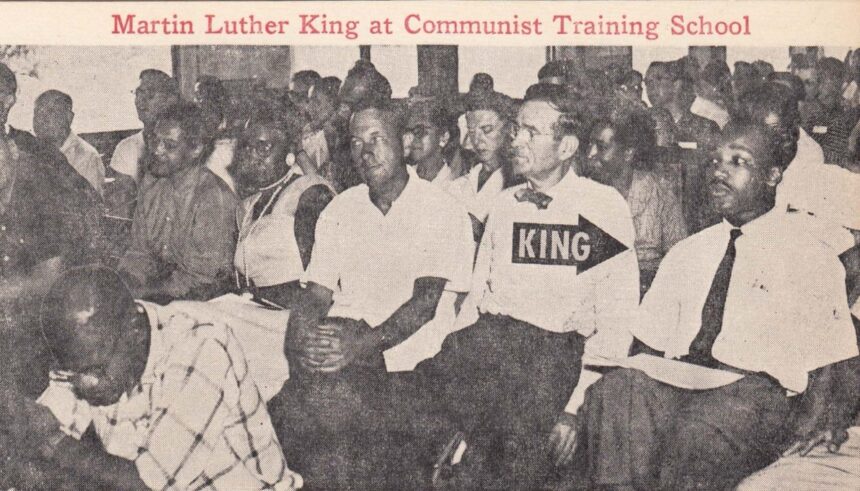
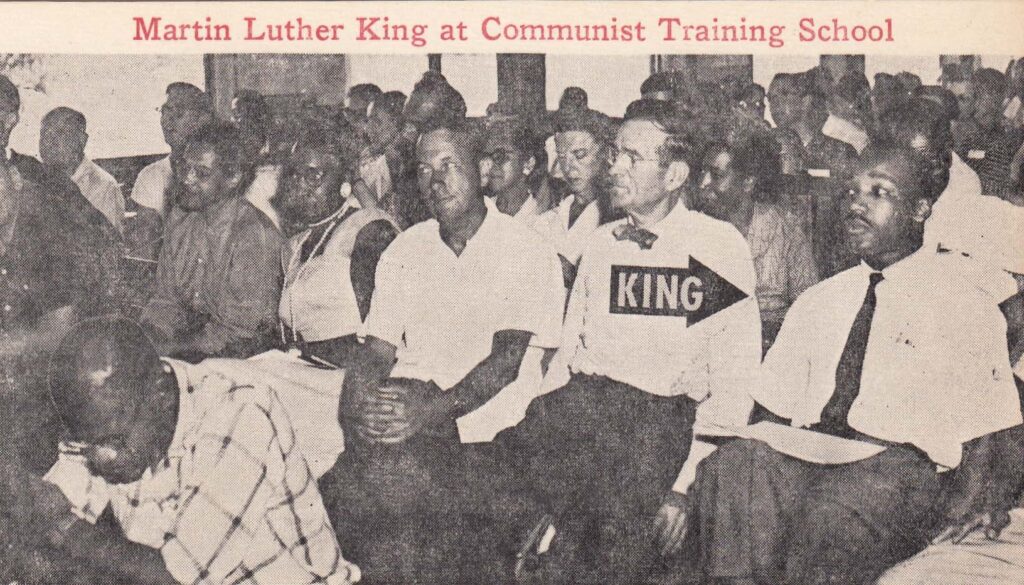
The attack on higher education, especially on initiatives associated with diversity, equity and social justice, is a central piece of this coordinated strategy. We can identify numerous examples of innovative forms of education and pedagogy that came to prominence during the 1950s and ‘60s, including the Highlander Folk School in Tennessee, Summerhill School in the UK, the Free School movement, the Freedom Schools of the Student Non-Violent Coordinating Committee and Paolo Freire’s experiments with workers literary programs in Brazil. The Highlander Folk School helped to train a generation of young activists who would play a central role in the Civil Rights movement, including Martin Luther King, Jr., Rosa Parks, and Ralph Abernathy. Key to this mission was a concept of “popular education” in which art (including music, theater and folk culture) would serve as a central component of the pedagogical process. The Highlander School was subject to ongoing attack by Southern racists and groups such as the John Birch Society because of its commitment to inter-racial education and activism.
FIELD is available at: www.field-journal.com
Grant Kester
Notes
- https://www.routledge.com/Pedagogical-Art-in-Activist-and-Curatorial-Practices/Galliera-Brynjolson/p/book/9781032748528 ↑
- See Feyzi Ismail, “The slow death of Goldsmiths is a warning to British universities,” Al Jazeera (June 15, 2026).https://www.aljazeera.com/opinions/2026/6/15/the-slow-death-of-goldsmiths-is-a-warning-to-british-universities ↑
- See: Alice Speri, “Just not monetizable: humanities programs face existential crisis at US universities,” The Guardian (January 20, 2026).https://www.theguardian.com/us-news/2026/jan/20/universities-humanities-programsAlso see: Zoe Pharo, “U. of C. freezes Ph.D. admissions to most humanities programs,” Hyde Park Herald (August 22, 2025).https://www.hpherald.com/evening_digest/u-of-c-freezes-ph-d-admissions-to-most-humanities-programs/article_100ee5ec-62e5-44ab-8eca-d00cc2b02d41.html ↑
- Nina Lakhani, “Professors’ union sanctions Florida college over ‘political’ DeSantis takeover,” The Guardian (February 27, 2024).https://www.theguardian.com/education/2024/feb/27/professor-union-sanction-florida-new-college-desantis ↑
- A recent example involves an Art Therapy professor at the School of the Art Institute of Chicago, who was placed on leave for a case study assignment of a hypothetical therapy patient that simply acknowledged in passing the “violence against Palestinian civilians” unfolding in Gaza. See: Alice Speri, “’We call it the P-word’: Chicago professor suspended after assignment mentions Palestinians,” The Guardian (June 5, 2026).https://www.theguardian.com/us-news/2026/jun/05/professor-suspended-assignment-mentions-palestinians ↑
- See, for example, Katherine Stewart, “How Fringe Christian Nationalists Made Abortion a Central Political Issue,” Literary Hub (June 12, 2020)https://lithub.com/how-fringe-christian-nationalists-made-abortion-a-central-political-issue/ ↑
- Bill Burton, “The Civil Rights Movement and Its Anti-Communist Opponents,” Postcard History (February 13, 2020).https://postcardhistory.net/2020/02/the-civil-rights-movement-and-its-anti-communist-opponents/ ↑
- https://www.rbpmw-efanyc.org/mohammed-omer-khalil ↑