
Are You Real Men? Queering the Militarized Masculinity in South Korea
Minji Chun
In March 2021, the first known transgender soldier in the South Korean Army, Byun Hui-su (1998–2021), committed suicide after being discharged in January 2020 for having undergone gender reassignment surgery while on leave. Despite her long fight to vindicate herself and secure the right to continue serving in the army as a “female” soldier, Byun’s request for reinstatement was peremptorily denied. Although the Korean court ultimately mandated her posthumous reinstatement and ruled the discharge unlawful and discriminatory,[1] it made no further statements about transgender individuals in general within the nation’s military system. Byun’s case brought renewed attention to protection for queer individuals serving as soldiers and stimulated discussions about the need for greater understanding of the queer community by all sectors of Korean society. The queer community and its allies in Korea have been advocating for more inclusive military policies, but progress has been slow. An example is Article 92-6 of the country’s military criminal act. Established in 1962, the article still outlaws same-sex activity among soldiers in the country’s predominantly male military and stipulates a maximum two-year prison sentence for engagement in anal intercourse and any other indecent acts between military personnel.[2] As with numerous other nations, Korea does not classify homosexuality as a criminal offense. Nonetheless, queerness in the military is still regarded as perversion, to be punished as a misdeed in accordance with military disciplinary instructions.
In this climate, Korean queer artists have criticized the military from manifold perspectives: some have finished their military service successfully yet were later accused of concealing their sexual identities, while others have refused to be part of the system, rejecting an environment that reproduces homophobia and sexism as well as recognizes only cisgender heterosexuals as “real men.” In the scope of this essay, I will delve into the activities of three artists born in the 1980s—Nahwan Jeon (1984–2021), KyungMook Kim (b. 1985), and Jeram Yunghun Kang (b. ca. 1985)—who have addressed wide-ranging discrimination in the contemporary Korean army, which reinforces toxic masculinity and perpetuates harmful gender and sexual stereotypes. Although these artists employ different strategies and media, all have argued that true masculinity is not defined by one’s ability to conform to traditional gender roles or engage in violent behavior. This argument is further emphasized in this essay through my contention that the agency and engagement demonstrated in each artist’s practice challenge the strict, seemingly generalizable notion of “being a man” in Korea, thereby rendering it open to queer evolution.
Prior to discussing individual artworks, it is essential to outline the distinctive features of the Korean army and scrutinize how their effects on society have diverged. According to Korea’s Constitution, every young, able-bodied man between the ages of 18 and 35 is required to serve in the military for 18 to 22 months. The institution of conscription stems from the geopolitical reality of the Korean peninsula, including North and South Korea as separate nations with a heavily fortified border. The continuous conflicts between the two countries, combined with the involvement of major world powers such as the United States and China, position Korea as a crucial hub for international relations, which necessitates militarized national security. In other words, “a militarized masculinity”—compellingly articulated by gender studies scholar You-me Park—came to be one of the elements constituting the postcolonial South Korean civic society.[3] This could also be interpreted as marginalized masculinity that has been defined by obedience to hegemonic, capitalist, heteropatriarchal norms, using them to legitimize oneself and achieve dominance while seeing opposition to the system as dystopian and aggressive.[4]
The normalized militarism in Korea manifests in different dimensions of Korean society, from mandatory military service by Korean men to the prevalence of military imagery in popular culture. A case in point is a variety show broadcast in Korea from 2013 to 2016 that followed Korean celebrities as they experienced military life in the armed forces. Throughout this television program called Jinjja Sanai (진짜 사나이, “Real Men”), which is also the title of a Korean military anthem), celebrities showcased their physical abilities as well as highlighted the significance of camaraderie and unity in the military. According to media theorists Woori Han, Claire Shinhea Lee, and Ji Hoon Park, “the male viewers [of Jinjja Sanai] attempted to recover the hegemonic masculinity that they perceived to be under threat from changing gender relations” by advocating for the reactivation of conventional gender norms.[5] Beyond the confines of the military system, both the Korean media and its audience perpetuate the idea that strength and masculineness are essential qualities of an “authentic” man. This pervasive cultural norm has exerted damaging effects on men who do not fit this narrow definition of masculinity, leading to feelings of inadequacy and pressure to conform. In this setting, queer existence is challenging to fathom.
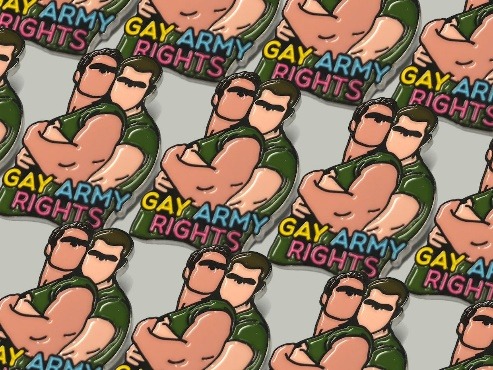
Figure 1. Nahwan Jeon, Gay Army Rights, 2017 (https://tumblbug.com/gayarmyrights/story)
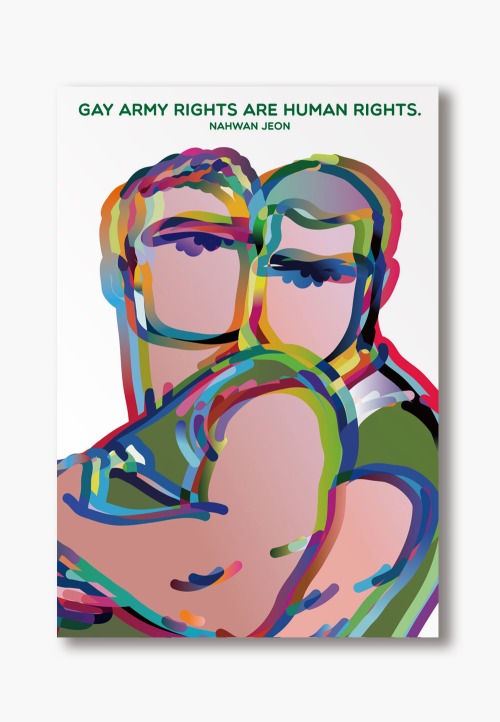
Figure 2. Nahwan Jeon, Gay Army Rights, 2017 (https://tumblbug.com/gayarmyrights/story)
Notwithstanding this reality, however, sexual minorities, including gay men, non-binary individuals, and transgender populations, have developed ways of surviving compulsory military service in an environment where male domination is entrenched within a heterosexually oriented society.[6] Nahwan Jeon, a Korean queer artist and activist, is among those who have spoken out against the normative sexuality defined by the Korean military system. The army’s strict adherence to masculine roles and heteronormative ideals has created a hostile environment for queer people. Against this backdrop, Jeon’s activism and advocacy have foregrounded the intersectionality of gender, sexuality, and militarism, emphasizing the need for systemic change in Korea’s military and beyond. An example is his fund-raising project Gay Army Rights (2017), intended to support the Korean Gay Army Activity Network, also known as the Gun-Ivan Centre, which uses the slogan “Gay Army Rights Are Human Rights.”[7] Jeon also condemned a detestable incident involving the Republic of Korea Army in 2017. The army hunted down homosexual soldiers after military investigators launched a probe in response to an online video of two male soldiers engaging in sexual activity. The investigation resulted in the punishment of at least 32 soldiers suspected of being homosexual. The artist shared the following sentiments:
“The right to sexual self-determination is a fundamental human right that must be upheld and safeguarded, including during military service. Additionally, even if sexual activity between individuals requires some degree of restriction in the military environment, the form of restriction does not necessarily have to be the criminal penalty… This legal provision is disproportionate since it imposes criminal punishment for a behavior that may be addressed by disciplinary measures. Additionally, it is discriminatory as it punishes same-sex sexual activity differently from heterosexual engagement.”[8]
According to activist and art critic Woong Nam, the mid-2010s denoted the beginning of the production culture of the queer community in Korean society. This culture’s expansion is reflected in the expression of confidence cultivated by the constant production of languages that convey identity and sexual orientation, as well as the accumulation of experiences.[9] The queer population that had been educated in professional art and design institutions embarked on merchandising production, establishing links between genres such as independent publications, webtoons, design, visual arts, and one-person media.[10] This change in queer community participation in merchandising production and cross-genre collaborations marked a significant turning point in Korean culture. Jeon’s project parallels this trend: by creating steel badges featuring a gay soldier couple hugging each other and color-printed postcards, Jeon raised awareness about the discrimination and harassment experienced by queer individuals in the military. It not only increased the visibility and representation of queer voices but also fostered a sense of community empowerment and artistic expression. Wearing Jeon’s pin badge is an indisputable symbol of advocacy for policy changes—particularly the abolition of Article 92-6—which would allow queer individuals to serve freely and without fear of persecution. Nam specifically emphasizes that Jeon, as one of the most community-oriented openly gay artists in Korea, “[sought] out different ways of meeting others’ gaze, representing and coexisting with them… even amid concerns of his exhibitions being reduced to part of a ‘message campaign’” in collaboration with external groups in queer rights movements.[11] By insisting on his own artistic autonomy while visually recalling the queer sensibility that characterizes some recent social movements, Jeon interacted with other artists of his generation and established relationships with the queer community and movement groups. Until his death in 2021, queer solidarity was at the heart of his work, as he sought to create dialogue between different identities and perspectives through a platform for marginalized voices to be heard and celebrated.
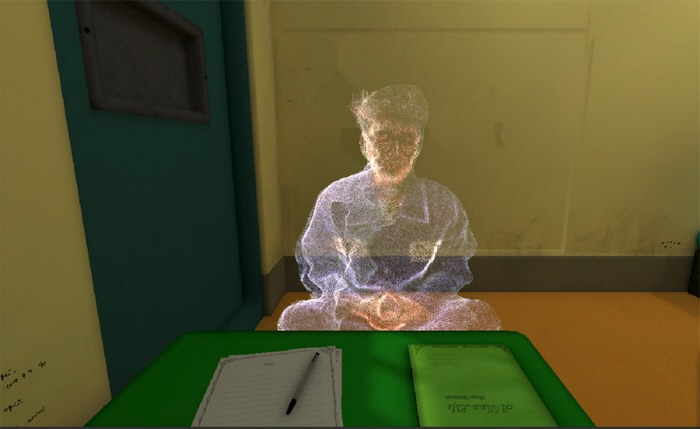
Figure 3. KyungMook Kim, 5.25m², 2022 (https://kyungmook.com/5-25m%c2%b2-2022/)
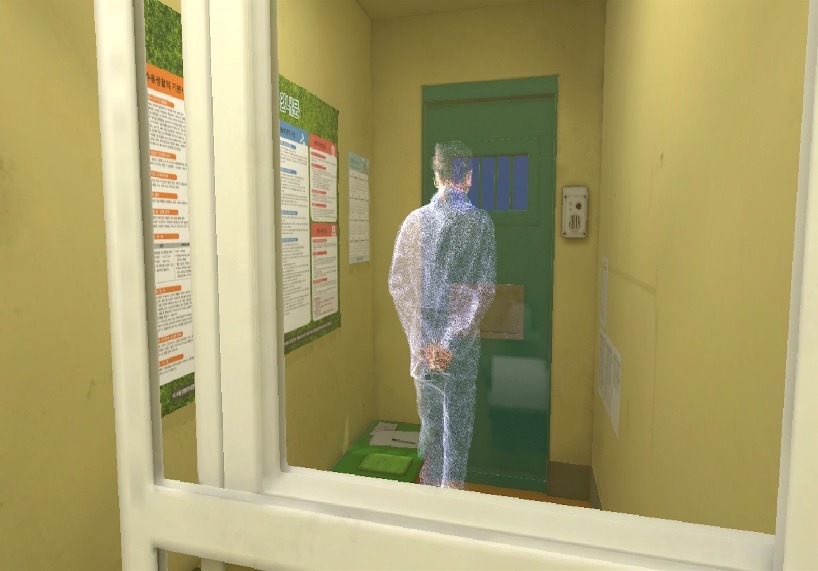
Figure 4. KyungMook Kim, 5.25m², 2022 (https://kyungmook.com/5-25m%c2%b2-2022/)
Meanwhile, as a filmmaker and media artist, KyungMook Kim has addressed the precarity of the lives led by stigmatized groups, such as homosexuals, transsexuals, and sex workers. In 2015, Kim was sentenced to 18 months in prison for refusing to enlist for mandatory military duty—a decision determined by their ardent pacifism.[12] In a statement released in 2014, the artist noted that “the position of a sexual minority was the appearance of a socially underprivileged person far from power” and that “mental death is the reason why [they] instinctively [reject] the military system.”[13] They view their refusal as a form of resistance against a system that perpetuates discrimination and violence, adding that they humbly accept the fear of serving a prison sentence as the price to pay for making a small contribution toward substantial changes to come, including “an era of peace in which human rights are guaranteed in the military.”[14] Despite facing legal consequences for their beliefs, Kim has remained steadfast in their commitment to social justice and equality. Furthermore, when Kim came out as gay, they were placed in solitary confinement for more than a year, separated from other male prisoners, until their parole in 2016. According to an online note written by the artist to accompany a trailer for their virtual reality (VR) film 5.25m² (2022), solitary confinement, contrary to popular belief, “does not just mean imprisonment in a cramped space of 5.25 m². Prison is an institution of a legally binding oppressive order in which discipline and subsequent obedience are the top priority.”[15] Revisiting their own experience in the fortified correctional facility of the Seoul Detention Center, Kim produced 5.25m², which immerses viewers in a virtual representation of the small cell where Kim was confined.
Kim’s VR film was exhibited during their solo show Quarantine (Post Territory Ujeongguk, 22 May–23 August 2021). Whereas most virtual reality works transport viewers to fictional realms beyond reality’s reach, 5.25m² is grounded in actual settings. Viewers can interact with realistic re-enactments and depictions of historical events and personal experiences that would otherwise be inaccessible. The VR film and solitary confinement both give a “place to experience [something] alone,” which is a common thread.[16] Here, the audience encounters the figure of a prisoner strolling akin to a transparent ghost, with the artist’s voice heard reading a letter to a friend serving in the military. The inmate often engages in repetitive motions, such as staring at a mirror or reading a book, before drifting off to sleep. They also practice meditation or stretching. Kim’s recollections of the production were exceptionally clear, considering that they spent most of their time in prison in solitary confinement within the eponymous enclosure. The immersive experience invites viewers to reflect on their own relationship with power, authority, and punishment in the military system. The film powerfully conveys the toll that prison’s dehumanizing practices take on inmates, including the psychological impact of prolonged isolation and confinement.
Four years after being released, Kim was invited to participate in a program called Prison Inside Me, run by the Korean wellness center Happitory (a portmanteau of “happiness” and “factory”), which resembles a prison. At Happitory, guests must remain in a designated cell for twenty-four hours, during which they are prohibited from using electronic devices. Kim’s essay on this mock prison stay was included in Solitary (2022), edited by artist Tyler Coburn (b. 1983), a collection of ten texts recounting an experiment on site-specific writing about the experience of being confined.[17] As presented in the book, Kim reflects on his experience as follows: “how much this place was unlike my former prison cell, where I woke up to the propaganda music of the Ministry of Justice,” which includes the lyrics “the more I follow the law, the better I feel.”[18] The artist precisely observes that the constant presence of propaganda music in their previous confinement symbolizes the oppressive nature of their surroundings, emphasizing the freedom and autonomy that they are denied.
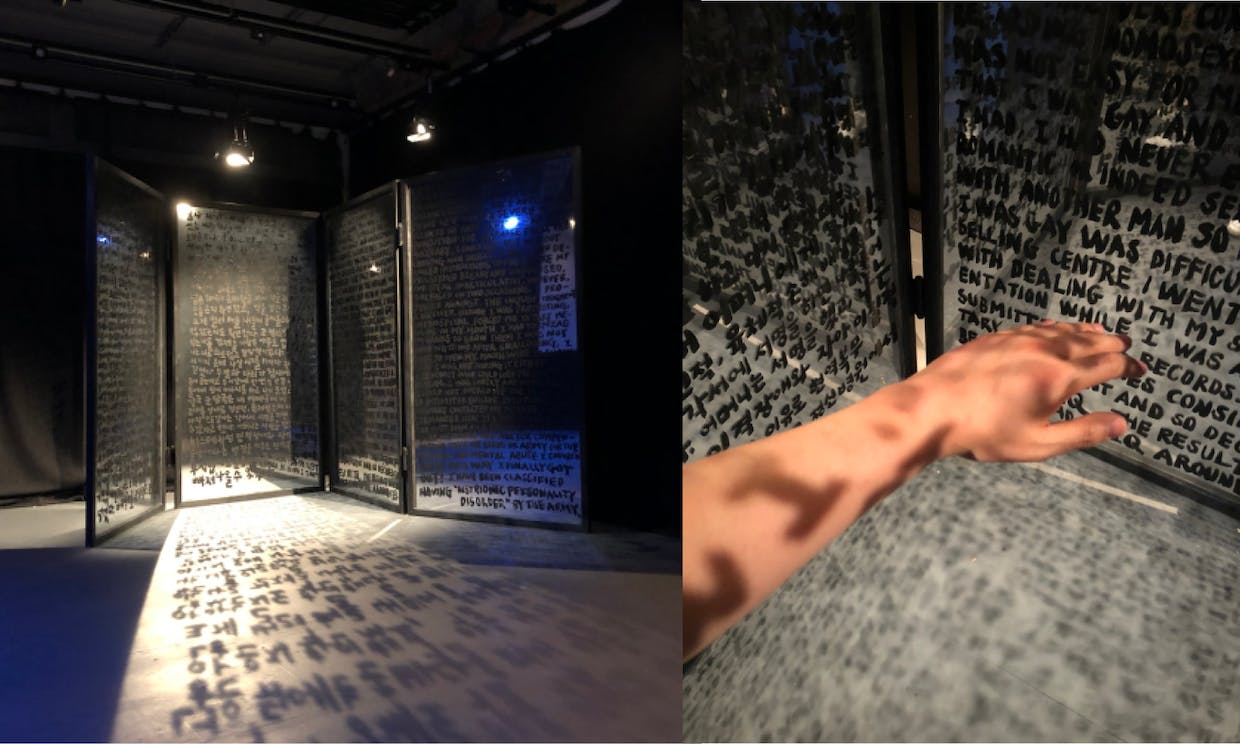
Figure 5. Jeram Yunghun Kang, You Come In We Come Out – Letters from Asylum, 2021 (https://www.sapy.kr/SLY1_youcomein)
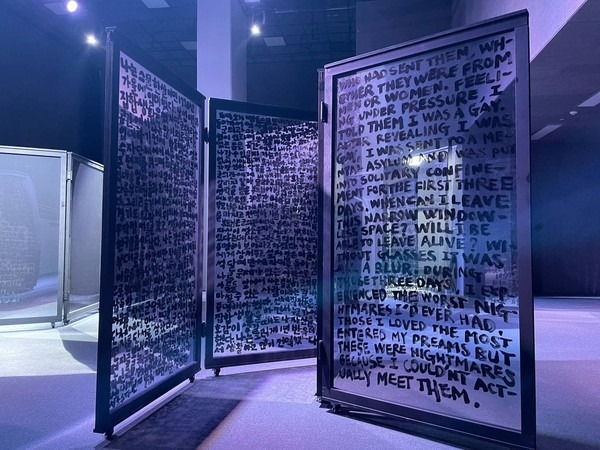
Figure 6. Jeram Yunghun Kang, You Come In We Come Out – Letters from Asylum, 2021 (https://www.sapy.kr/SLY1_youcomein)
This essay’s final feature, Jeram Yunghun Kang, is based in Jeju, Korea, and was harassed and sexually molested while serving in the Korean military from 2008 and 2009. According to an interview with Amnesty International, after Kang completed his initial training in 2008, he was assigned to work as a “driver soldier,” a role viewed as the lowest and most “feminine” rank in the military. This assignment made him the target of harassment. Kang was repeatedly molested, kissed on the neck, and had his pants pulled down by superiors and other members of his unit.[19] In the 2000s, the concept of kkonminam (꽃미남, “flower boy”) arose in Korea as part of the worldwide trend known as metrosexuality, wherein men demonstrate a heightened concern for their physical appearance and engage in grooming practices traditionally associated with women.[20] Although it has had its adherents in other nations and is also highly visible in Korean popular culture, the notion of flower boys is generally unwelcome in Korea, where some perceive such individuals as a challenge to conventional masculinity and a departure from established societal norms. Especially in the context of the military, behaviors that deviate from traditional masculine norms and expectations are often met with increased surveillance and adverse reactions. Kang was outed and subsequently transferred to a psychiatric ward, where he was imprisoned for more than 100 days and forced to take antidepressants. He also attempted suicide twice. In this climate of ongoing oppression, few mental health resources were available to help him cope with his experience. Despite these difficulties, however, Kang became a vocal advocate for queer rights in Korea, using his art to raise awareness. In 2017, when a “gay witch hunt” was conducted in the Korean military by means of the dating app Jack’d, he experienced survivor’s guilt and realized that “if no one speaks, nothing changes.”[21] He felt an intense responsibility to make his voice heard and ultimately brought a societal shift to the fore in which “[t]rauma is now a historical modifier inventing and promoting a cultural, legal, and political territory all its own” rather than a mere “circumscribed medical or theoretical condition.”[22]
Kang’s You/We Come In I/We Come Out (2018–) is an installation series consisting of a letter or letters that he wrote on a large, mirrored door and other adjacent mirrored doors. The doors inside an exhibition space create a narrow zone, and visitors are compelled to enter the space to read the letters. Those outside cannot see what is inside, with visitors standing beyond the installation witnessing their own reflections through a mirror film affixed to the exterior of the installation. Only those who “come in” are privy to the showcase, giving rise to a sense of intimacy and discretion. The shadows cast by the letters vary depending on the position and angle of illumination, as though they were penetrating the floor as well as a visitor’s body. Within the exhibition space, visitors can read the letters on the mirrors, which reflect their own image behind the words and thus intertwine their own stories with the installation. The purpose is to deter the audience from perceiving the installation as a detached narrative centering only on one individual’s life; it fosters a sense of connection and active participation in the personal anecdotes conveyed. Mirrors also add a layer of introspection, allowing visitors to reflect on their own experiences and become part of a larger narrative in a community that transcends individual stories. Through this process, the concealed narrative “comes out” into the world.[23]
In You Come In I Come Out – A Letter from Asylum (2019), which is based on Kang’s own testimony, the ambiguity of the English word “asylum” is accentuated. Kang developed this series to demonstrate how the word can signify different meanings depending on context: Although one of its distinct interpretations, “confinement,” typically refers to imprisonment, it may also be used to describe a sanctuary. This dual meaning indicates that for sexual minorities, their surroundings can either be a prison or a haven, contingent upon the prevailing attitudes of individuals in society toward them. Similarly, You Come In We Come Out – Letters from Asylum (2021) features the testimonies of queer ex-soldiers whose experiences paralleled Kang’s, thereby giving voice to their memories. In this work, ‘Letters’ has replaced ‘A Letter’ and ‘I’ has become ‘We’ over the years. This change, while maintaining the installation format of the previous series, represents a transition and expansion from a personal account to a collective one, underscoring a sense of solidarity and unity. In Kang’s work—as in KyungMook Kim’s—solitary confinement is thus no longer an isolated space devoid of contact with the outside world but one converted into a space where the voices, gazes, and movements of other individuals can intervene and occupy it.[24] By deploying affection and intimacy in his works, Kang uses strategies that invite rather than confront.
Being a soldier may naturally entail not only receiving physical training but also abiding by primarily male-influenced traditions. It might be referred to as the blind force of (human) nature, considering the historical context of modern Korea, where the nation-state urgently sought to reclaim hegemonic masculinity for reconstruction after being under Japanese colonial control. That is, it is not an exaggeration to state that the Korean military is a social class subordinate to the national system that helps to sustain masculine authority. In this entrenched patriarchal society, men are often expected to embody characteristics such as strength, courage, and discipline, which have been conventionally associated with masculinity. Three artists’ practices examined in this essay—not vehement, vociferous, direct resistance against a militaristic system—presumably cannot solve the persistent problem of the Korean army. Nonetheless, by espousing solidarity, resonance, empathy, and “queer kinship”[25] as recurrent themes, every approach examined above not only amplifies the untold stories of marginalized segments of society but also encourages a broader dialogue on queer identities and experiences in the military. These artists’ efforts to offer novel perspectives on masculinity, which involve much contrapuntal complexity, are being permeated into society subtly but subversively. This is the arena where multiple masculinities, rather than one, emerge.
Acknowledgement
The author extends heartfelt thanks to the Nahwan Archive, KyungMook Kim, and Jeram Yunghun Kang for their generous permission to use the images in this publication.
Minji Chun is an art critic, curator, and translator working between Oxford and Seoul. Currently a doctoral candidate in History of Art at the University of Oxford, she focuses on socially engaged art in contemporary Korea, with a particular interest in overlooked histories and spaces. Her writings have been featured across a range of publications, including Hyundai Artlab, ArtAsiaPacific, Art&Market, and Wolganmisool (Monthly Art).
Notes
- “When based on [the] standards of women, there are no mental or physical disability grounds for dismissal,” the court said, ruling in Byun’s favor. “Transgender Soldier in South Korea Wins Posthumous Court Victory,” NBC News, 7 Oct. 2021, at www.nbcnews.com/news/world/south-korean-court-orders-posthumous-reinstatement-transgender-soldier-n1280990. ↑
- Military Criminal Act [Kunhyŏngbŏp]. See Korean Law Information Centre, Ministry of Government Legislation at www.law.go.kr/%EB%B2%95%EB%A0%B9/%EA%B5%B0%ED%98%95%EB%B2%95. ↑
- You-me Park, “The Crucible of Sexual Violence: Militarized Masculinities and the Abjection of Life in Post-Crisis, Neoliberal South Korea,” Feminist Studies 42, no. 1 (2016): 17–40. ↑
- Sayak Valencia, Gore Capitalism (Cambridge: MIT Press, 2018), 256. ↑
- Woori Han, Claire Shinhea Lee and Ji Hoon Park, “Gendering the Authenticity of the Military Experience: Male Audience Responses to the Korean Reality Show Real Men,” Media, Culture & Society 39, no. 1 (2016): 62–76. ↑
- The situation in South Korea presents a notable contrast to that of the United States, where queer individuals are currently allowed to serve openly in the military and no longer need to hide their sexual orientation. This change came about with the repeal of the anti-gay discrimination policy known as “Don’t ask, don’t tell” in 2011. Seongjo Jeong and Na-Young Lee, “Invisible Others: Institutional Homophobia and Identities of Sexual Minority in the Korean Military [Poiji annŭn kunindŭl: han’gung kundae nae tongsŏngaehyŏmowa sŏngsosuja chŏngch’esŏng],” The Korean Journal of Cultural Sociology 26, no. 3 (2018): 83–145. ↑
- https://nahwanjeon.tumblr.com/gay-army-rights. ↑
- https://tumblbug.com/gayarmyrights/story. ↑
- “The cultural accessibility of the queer community is not limited to the intervention of established artists, designers, and expert groups in the issue of social consciousness. What is more noteworthy is the diversification of members’ desires within and outside queer organizations based on membership.” Woong Nam, “Bustling with Germinating Communities – A Walk to the Sexual Minorities’ Community [Parahanŭn k’ŏmyunit’i puryasŏng – sŏngsosuja k’ŏmyunit’i sanbohagi],” Webzine of Solidarity for LGBT Human Rights of Korea, 30 January 2016, lgbtpride.tistory.com/1154#footnote_link_1154_8. ↑
- Woong Nam, “Subjugation and Discord in Contemporary Queer/Art [Tongshidae k’wiŏ/yesurŭi yesokkwa purhwa],” Seminar no. 2 (2019), www.zineseminar.com/wp/issue02/%eb%8f%99%ec%8b%9c%eb%8c%80-%ed%80%b4%ec%96%b4-%ec%98%88%ec%88%a0%ec%9d%98-%ec%98%88%ec%86%8d%ea%b3%bc-%eb%b6%88%ed%99%94. ↑
- Woong Nam, “The Sun Shines on an Undreaming Mountain,” Sun, Sun, Sun, Here It Comes, exh. cat (Seoul: Factory 2, 2018). ↑
- https://kyungmook.com/bio/. ↑
- “Statement on the refusal to enlist by Kim KyungMook [Kimgyŏngmung pyŏngyŏkkŏbusogyŏnsŏ],” World Without War, 2014, at http://www.withoutwar.org/?p=9154&ckattempt=1. ↑
- Ibid. ↑
- https://kyungmook.com/5-25m%c2%b2-2022/. ↑
- Seung-chan Baek, “’Memories of solitary confinement’ revisited in VR… Director KyungMook Kim held his first solo exhibition after being imprisoned for conscientious objection to military service, [VR-ro torabon ‘tokpangŭi kiŏk’t’…pyŏngyŏkkŏbu sugam ihu ch’ŏt kaeinjŏn yŏn kimgyŏngmung kamdok]” Kyunghyang Shinmun, 10 November 2021, https://www.khan.co.kr/culture/culture-general/article/202111101558001#c2b. ↑
- https://tylercoburn.com/solitary.html. ↑
- KyungMook Kim, “Solitary,” in Solitary, ed. Tyler Coburn (London: Sternberg Press, 2022), 28. ↑
- Amnesty International, Serving in Silence: LGBTI People in South Korea’s Military, July 2019, https://www.amnistia.pt/wp-content/uploads/2019/07/Serving-in-Silence-LGBTI-People-in-South-Korea%E2%80%99s-Military.pdf, 32. ↑
- Colby Miyose and Erika Engstrom, “Boys Over Flowers: Korean Soap Opera and the Blossoming of a New Masculinity,” Popular Culture Review 26, no. 2 (Summer 2015): 2–13. ↑
- Bakhtawer Haider, You Come in, I Come Out | Content Free, 8 May 2019, content-free.net/news/you-come-in-i-come-out. ↑
- Mark Jarzombek, “The Post-traumatic Turn and the Art of Walid Ra’ad and Krzysztof Wodiczko: From Theory to Trope to Beyond,” Trauma and Visuality in Modernity, eds. Lisa Saltzman and Eric M. Rosenberg (Hanover: Dartmouth College Press, 2006), 260. ↑
- Ju-yeon Park, “Sexual Minority, Jeju Person… Turning Personal Stories into ‘Our History’ [Sŏngsosuja, chejusaram… sajŏgin iyagirŭl ‘uriŭi yŏksa’ro],” Ilda, 6 November 2021, www.ildaro.com/9193. ↑
- siren eun young jung, “Some Tendencies in Korean Queer Art Now [Chikŭm, Han’guk q’wiŏmisulŭi Ŏttŏn Kyŏnghyang],” Ilda, 26 November 2021, https://www.ildaro.com/9209. ↑
- “This experience of together-in-difference, which I call queer kinship, is not flawless, but it does hold the potential to destabilize monocultural minoritarianism and to recollect the role of race, class, and gender nonconformity within the queer past.” Jennifer V. Evans, “Queer Kinship in Dangerous Times,” in The Queer Art of History: Queer Kinship After Fascism (Durham: Duke University Press, 2023), 185. ↑