FIELD Global Reports 2026: Entering the Unpresent
Over eighteen months into Trump’s second presidency, with authoritarian governance entrenching itself across the globe, these final set of Global Reports I have organized arrive at a moment when the crisis documented throughout this series has entered a new phase. Previous reports last year from Italy, Austria, Portugal, Hungary, Serbia, and North Macedonia examined how both established liberal European democracies and former socialist states became laboratories for illiberal governance. The second set—from India, Turkey, and the UK—demonstrated that authoritarian cultural control was contracting around an ever-enlarging portion of the globe. This concluding trio of reports from Poland, Germany, and Latin America reveals something perhaps more disorienting: not simply the tightening of authoritarian grip, but the vertiginous instability of the ground on which cultural workers once stood. What connects these three very different dispatches—a sardonic analytical essay from Warsaw by Kuba Szreder, a structured assessment from Berlin by Karen van den Berg, and a multilingual torrent of questions from across the Global South by Red Conceptualismos Del Sur—is a shared recognition that the old frameworks for understanding the relationship between art, politics, and democratic order have themselves become unreliable. We have entered what I have elsewhere called the “Unpresent”—a temporal condition in which the familiar markers of democratic normalcy persist as spectral forms while the material conditions that sustained them dissolve. What is striking about this final set is how deeply that condition has been internalized, not only by the authors but by the cultural fields they describe.
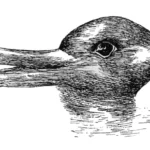
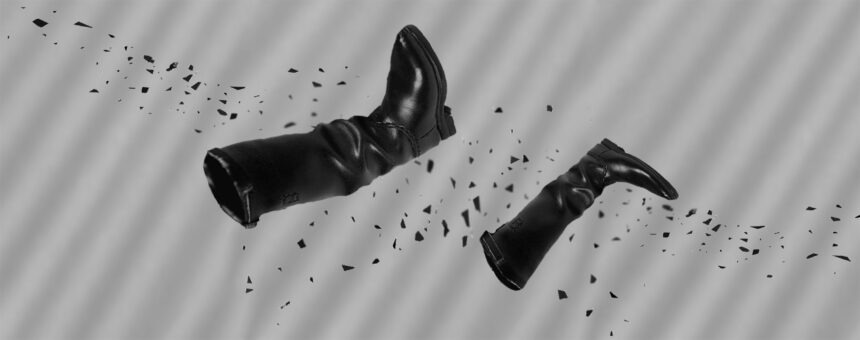
Kuba Szreder’s “Between the Shitstorms,” updating his earlier, 2019 FIELD report “Duckrabbits Against Fascism,” writes from what he calls referencing Gramsci, Poland’s “democratic interregnum”—the brief respite following the 2023 electoral defeat of the Law and Justice party, a pause that virtually no one he speaks with expects to survive the next elections in 2027. What is most telling is that this democratic victory feels, in Szreder’s account, less real than the authoritarianism that bookends it—a sensation he connects to the condition of an uncanny, “radical Unpresent,” in which the democratic order appears as a passing delusion viewed from the vantage point of a grimmer new normal. His analysis sharply focuses on the new Museum of Modern Art in Warsaw, which he reads as a parable of neoliberal institutional self-destruction: conceived as a flagship of global art-world circulation, dependent on the metropolitan privilege it was built to reinforce, and by its very self-indulgence feeding the anti-metropolitan resentment that empowers the far right. Szreder further likens the neoliberal art establishment to Wile E. Coyote sprinting past the cliff’s edge—still running, but the ground is already gone. Yet his report is ultimately not a counsel of despair. His “duckrabbits”—postartistic practitioners, stray academics, pataphysicians, and activist-artists—represent something the grand institutions cannot: the nimbleness, humor, and comfort with ambivalence needed to navigate a world where fascists advocate against censorship and leftists cancel each other. Small, fluffy, and edgy, they may outlast the dinosaurs of the neoliberal art world precisely because they never depended on its infrastructure. “What they lack in fangs, they make up for in edgy humour and postartistic flair.”
Karen van den Berg’s “Imagination Boosters Against Hyperpolitics” returns to Germany seven years after her first FIELD report to find the cultural landscape fundamentally redrawn. She identifies three decisive shifts. First, the 2019 Bundestag resolution classifying BDS as antisemitic—and the cascading boycotts, disinvitations, and institutional closures that followed—broke what van den Berg recognizes as the post-war bourgeois-liberal cultural consensus, in which tolerance for critical art was a hallmark of the victorious democratic “West” and artistic autonomy functioned as what Herbert Marcuse called “affirmative culture,” keeping dissent safely contained in symbolic form. That consensus is now shattered, replaced by what political scientist Anton Jäger terms “hyperpolitics”: heated politicization without political consequences, a hall of mirrors in which boycotts beget counter-boycotts and self-righteousness proliferates on all sides. Second, activist art has grown more explicitly interventionist—from the Centre for Political Beauty drowning out a far-right AfD politician’s television appearance with amplified choral chanting, to artists occupying unused urban spaces through “parasitic aesthetics.” But van den Berg’s perhaps most consequential observation concerns a third development emerging in the shadows of the boycott wars: private philanthropists and non-governmental initiatives are quietly building sustainable cultural infrastructure that the state has either abandoned or weaponized. The private SPORE initiative hosted a cancelled event on multidirectional memory; persecuted journalists find shelter in donor-funded Berlin workspaces. Most strikingly, artist Marina Naprushkina’s Tegelsee lido—born during the pandemic from a collaboration of artists, refugees, and volunteers—has secured a forty-year lease for a site of radical self-governance funded entirely by private donations, while the internationally renowned Park Fiction in Hamburg expands by 160 percent. That philanthropists now fund the cultural democratic work that was once the province of the state recalls a pattern previously seen primarily in post-Soviet countries through the Soros Foundation—a comparison van den Berg rightly insists should alarm us, even as these counter-hegemonic micro-infrastructures offer genuine grounds for hope. One thing is undeniably clear: paradox accompanies the state of things today in ways seldom as intense, disorienting, or potentially productive.
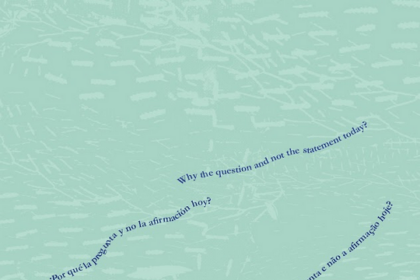
Red Conceptualismos del Sur’s contribution departs most radically from the report format, and deliberately so. Where the other two authors analyze political conditions through argumentation and evidence, this Latin American collective—whose nearly twenty years of activist art practice span the continent—refuses the declarative mode altogether, offering instead a vast, collaboratively written weave of questions in Spanish, Portuguese, English, French, Italian, Mapudungun, Quechua, and Guaraní. Their reasoning is itself a political position: manifestos, with their categorical certainties, are too rigid for a context as turbulent as the present. The question, by contrast, opens space—it is, as they write, “a hook of words, to pull them out of a throat-knot.” Their multilingual cascade—Who designs the territories and for what purpose? How does the energy of power circulate? What gaps can we find to hack the present? How do you breathe when faced with a faded map?—moves across scales from the geopolitical to the bodily, refusing the separation between intellectual analysis and lived sensation that more conventional reports maintain. Accompanying this interrogative text is an International Graphic Campaign, rooted in the tradition of Argentine artist Romero’s muestra-libro—cheap, reproducible, transportable exhibition-books that since the 1980s have composed collective political stances through art. Red Conceptualismos del Sur thus offers not documentation of resistance but resistance as method: anti-fascist, anti-racist, anti-colonial, and grounded in the conviction that translation between languages and territories is itself a political practice capable of recomposing collective bonds where authoritarianism seeks to sow isolation and silence.
Taken together across all four recent installments (2025, and now 2026), these Global Reports have traced not only the global spread of authoritarian cultural suppression but a transformation in the nature of cultural resistance itself. When this series began in 2019 with reports spanning every major region—from the Far East to South America, the Middle East to Northern Europe — the project was conceived as a comprehensive first survey of how rising authoritarianism was reshaping conditions for socially engaged art worldwide. Subsequent reports from Italy, Austria, Portugal, Hungary, Serbia, and North Macedonia examined how European democracies old and new became laboratories of illiberal governance, while dispatches from India, Turkey, and the UK revealed how deeply such control penetrates even long-established democratic cultures, surfacing survival tactics from the most embattled zones. This final set registers something further: the collapse of the liberal frameworks that once gave cultural opposition its bearings, and the emergence of new forms — Szreder’s nimble duckrabbits, van den Berg’s imagination-boosting micro-infrastructures, Red Conceptualismos del Sur’s seedbed of transnational questions—that no longer rely on the institutional scaffolding of the old order. These are modes of cultural practice designed not for a world that might be restored but for one that must be navigated, reinvented, and endured. It is our hope at FIELD that someone will step-up to continue curating reports on our situation for FIELD, because the intelligence they provide—dispatches from cultural workers operating across increasingly hostile and unstable terrain—has never been more urgently needed. As Red Conceptualismos del Sur reminds us, asking them is not paralysis but activation.
Gregory Sholette, February, 2026